
Key takeaways
- Four adult hockey sticks sold on Amazon, from a rugged wood street stick to a 400-gram carbon composite, with flex, curve, and kick point explained.
Buying an adult hockey stick on Amazon is harder than it looks. The pro sticks that fill the shop windows are mostly specialty-retail only, so the Amazon shelf is a mix of budget composites, wood street sticks, and closeout models, and the listings rarely explain what flex, curve, or kick point actually mean for your shot. Pick the wrong flex and the stick never loads; pick the wrong length and your hands slow down; pick the wrong blade for your surface and the stick wears out in a month.
This guide is for adults who play ice hockey, street hockey, or roller hockey and want a stick they can actually buy on Amazon. The four picks below come from Amazon listing names and specs: a tough wood street stick, a budget carbon composite, a proper all-round ice stick, and a light carbon stick built around a low kick point.
Quick Picks
As an Amazon Associate we earn from qualifying purchases.
| Product | Best for | Key spec from title |
|---|---|---|
| Franklin Sports Power X Street Hockey Stick | Driveway and street games | One-piece poplar and birch wood shaft, ABS blade |
| Mylec MK5 Pro Carbon Composite Hockey Stick | Budget carbon feel on ice or street | 60-inch mid-kick carbon composite shaft |
| STX Surgeon RX3 Ice Hockey Stick | All-round ice play with a grip shaft | PrecisionFlex II, Puregrip shaft, Silver Streak blade |
| Pro Blackout Senior Hockey Stick | Lightest carbon stick in this guide | 400-gram, 100% carbon, true one-piece |
How to Choose
Flex: Match the Number to Your Strength
Flex is the force in pounds needed to bend the shaft one inch, and it decides whether the stick loads when you shoot. Senior sticks usually run from 75 to 110 flex. A lighter adult, or a player with less upper-body strength, gets far more out of 75 flex than out of 95, because a stick you can bend stores energy and releases it into the puck, while a stick you cannot bend stays dead in your hands. A rough guide is half your body weight in pounds as the flex number. Beginners should err soft: a softer stick forgives a late release, and you can always move up a flex once your shot improves.
Curve: Pick the Blade Shape Before the Brand
The curve decides how the puck leaves the blade, and it matters more than the logo on the shaft. P92 is the most common pattern: a mid-toe curve with an open face that lifts the puck easily and suits wrist shots and snapshots. P88 is a mid curve with a closed face, better for flat passes and backhands. P28 is a deep toe curve built for toe drags, but it is harder to control and punishes sloppy handling. Brands rename these patterns, so read the curve code on the listing, not the marketing name. If you have never chosen a curve, P92 is the safe pick, and it is the pattern most of the sticks in this guide carry.
Length: Cut It to Fit, or Buy It Right
A stick that fits reaches your chin when you are in skates, and your nose when you are in shoes. Too long and your hands drop, your passes slow, and the blade drags behind the puck. Too short and you bend at the waist on every stride, which tires your back and shortens your reach. Most senior sticks arrive at 60 to 65 inches in total length, and the listing usually gives the shaft length rather than the total, so check which number you are reading. A composite stick can be cut down, but cutting it shortens the flex, so a stick bought at the right length always plays better than one cut to fit.
Kick Point and Surface: Low, Mid, or Wood
Kick point is where the shaft bends most when you load it, and it shapes the shot. A low kick point loads near the blade, so the puck leaves fast on wrist shots and quick snapshots, which suits forwards who shoot in tight space. A mid kick point loads through the middle of the shaft, which suits slap shots and one-timers from the point. Wood shafts with ABS blades belong on asphalt, concrete, and sport court, where they take abuse without complaint. Carbon sticks belong on ice, because a carbon blade wears quickly on rough ground. Match the stick to the surface first, then worry about the kick point.
The 4 Best Options
Franklin Sports Power X Street Hockey Stick

The Power X is the driveway and street-game pick in this guide, and it earns its place by being tough rather than fancy. Its one-piece wood shaft gives a natural, responsive feel, and the ABS blade is built to survive asphalt, concrete, and sport court without chipping the way a carbon blade would. The stick is officially licensed by the NHL for street hockey, and it comes in youth, junior, and senior sizes, so an adult buys the 56- or 58-inch senior version rather than a junior stick with a similar name.
Specs
- One-piece construction with a multi-ply poplar and birch wood shaft
- High-impact ABS blade built for outdoor surfaces
- Fiberglass laminate coating on the shaft for added stability
- Officially licensed by the NHL for street hockey play
- Senior sizes: 56 and 58 inches, in left and right handed versions
- Model: 40054L
Best for: Adults playing street or roller hockey on asphalt, concrete, or sport court.
Watch out for: This is a street stick, not an ice stick. The wood shaft and ABS blade are built for pavement, and the listing gives no rated flex number, so confirm the size (56 or 58 inches) and the shooting hand on the listing before ordering.
Mylec MK5 Pro Carbon Composite Hockey Stick

The MK5 is the budget carbon pick, and it is the stick for an adult moving from wood to composite without paying for a pro-tier name. Its DURATECH carbon composite shaft is light and lively, the mid-kick profile loads evenly for wrist shots and slap shots alike, and the foam core blade with ABS inserts adds durability where a pure carbon blade would chip. A 30-day breakage replacement covers the first month, which is the window when a new stick either proves itself or breaks.
Specs
- DURATECH carbon composite shaft
- Foam core blade with ABS inserts
- Mid-kick flex profile
- Length: 60 inches
- 30-day breakage replacement
Best for: Adults moving from wood to composite who want a light, lively stick for casual ice or street play.
Watch out for: Confirm the hand and the length on the listing, because the MK5 is sold in one senior length. A composite blade also wears quickly on rough concrete, so keep it off the driveway if you want it to last.
STX Surgeon RX3 Ice Hockey Stick
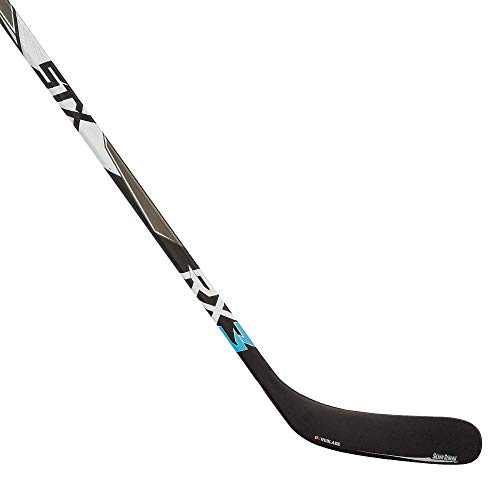
The Surgeon RX3 is the proper all-round ice stick in this guide, and it is the one to buy if you play ice hockey every week. Its PrecisionFlex II technology puts the flex peak in the lower shaft for a quick release, the Puregrip shaft finish keeps your top hand planted, and the Silver Streak material injected into the base of the blade adds stability where blades usually fail. The Peregrine ergonomic shape on the underside of the shaft gives more hand contact, which is a small detail that shows up every time you carry the puck through traffic.
Specs
- PrecisionFlex II technology with a flex peak in the lower shaft for quick release
- Puregrip shaft finish
- Silver Streak material injected into the base of the blade
- Peregrine ergonomic shaft shape for more hand contact and control
- Mid kick point
- Flex options: 75, 85, 95, 100; curves X92, X88, X28
Best for: Adult ice players who want a proper composite stick with a grip shaft and a real choice of flex and curve.
Watch out for: The RX3 is sold in many flex and curve combinations, so confirm the exact flex and curve code on the listing, because the same model name covers several different sticks.
Pro Blackout Senior Hockey Stick

The Pro Blackout is the lightest carbon stick in this guide, and it is built for players who want a quick release without carrying a pro-tier name on the shaft. At 400 grams it is lighter than every other pick here, the true one-piece construction removes the weak joint where blade meets shaft, and the low kick point loads near the blade for fast wrist shots. The soft-touch grip finish keeps the shaft planted in your top hand, and the P92 curve is the familiar mid-toe pattern that lifts the puck easily near the net.
Specs
- 100% carbon fiber construction
- True one-piece construction
- Low kick point flex profile
- Weight: 400 grams
- Curve: P92 (Blade 1); flex: 75
- Shaft length: 60 inches (65 inches total)
- Soft-touch grip finish on the shaft
- 30-day full manufacturer’s warranty
Best for: Adult players who want the lightest carbon stick in this guide with a quick-release low kick point.
Watch out for: Confirm the live offer on Amazon.com before ordering, because this listing was verified through the Canadian listing record. The same stick name also covers several Blackout variants, so check the listing shows Left, P92, and 75 flex.
Which One Fits Your Situation
You Play on Asphalt or Concrete
Buy the Franklin Power X. A wood shaft and an ABS blade are built for pavement, while a carbon stick chips and wears on rough ground. Choose the senior size that matches your height, check the shooting hand, and accept that the stick has no rated flex number: on a street stick, length and toughness matter more than flex.
You Want Composite Feel Without the Pro Spend
Choose the Mylec MK5 or the Pro Blackout. The MK5 is the cheaper step up from wood, and the Blackout is lighter and quicker with its low kick point. Both are carbon, so keep them on ice or smooth sport court rather than rough concrete, and check the hand and flex on the listing before ordering.
You Play Ice Hockey Every Week
Buy the STX Surgeon RX3. A proper curve choice, a grip shaft, and a mid kick point suit slap shots and one-timers as well as wrist shots. Pick 75 flex if you are lighter or returning to the game, and 85 flex if you are heavier or stronger, then match the curve code to the shot you take most.
You Are Returning to the Game After Years Away
Take the Franklin Power X for street games, or the STX RX3 in 75 flex for ice. A softer flex and a familiar P92 curve make the first month back far easier than a stiff pro stick, and both sticks are forgiving enough to let your hands remember the game before your legs do.
Common Mistakes
- Buying the stiffest flex because it sounds stronger. A stick you cannot load is a stick that never shoots.
- Picking a curve by its marketing name instead of its code. P92, P88, and P28 behave differently, and brand names for the same pattern are not the same.
- Using a carbon ice stick on asphalt. The blade wears down fast on concrete, and the damage is permanent.
- Ordering the wrong hand. Left and right refer to the lower hand on the shaft, not the hand you write with.
- Skipping the length check. A stick that reaches past your chin in skates slows your hands and bends your back.
Frequently Asked Questions
What flex should an adult beginner choose?
A 75 flex suits most lighter adults and returning players, while 85 flex suits heavier or stronger players. If you sit between two flexes, take the softer one: a stick you can load properly shoots harder than a stiff stick you cannot bend, and you can move up a flex once your shot improves.
Can I use a street hockey stick on the ice?
A wood stick with an ABS blade works on ice in a pinch, but it is heavier and less lively than a composite ice stick, and the ABS blade does not grip the puck the way a composite blade does. For regular ice play, buy an ice stick instead of making a street stick do double duty.
How do I know my shooting hand?
Hold the stick with both hands in a comfortable stance. The hand closer to the blade is the lower hand: a left lower hand means a left-shooting stick, and a right lower hand means a right-shooting stick. It has nothing to do with the hand you write with, so do not guess from that.
Do I need to tape the blade?
Tape protects the blade and adds grip on the puck. A single layer of cloth tape on the blade face and a knob of tape on the butt end is the usual setup, and it also keeps a wood blade from soaking up moisture. Replace the tape when it frays, because worn tape grips less and lets the blade wear faster.
FAQ
What flex should an adult beginner choose?
Can I use a street hockey stick on the ice?
How do I know my shooting hand?
Do I need to tape the blade?
More from Amazon
Programs that pair well with the guide above. Offers and eligibility are set by Amazon and may change.
Free shipping on eligible items, Prime Video and more. Eligible new members can start with a free trial.
Start a Prime free trialAudiobooks and podcasts to listen to on the go. Eligible new members can start with a free trial.
Try Audible freeAd-free music streaming. Eligible new subscribers can start with a free trial.
Try Music Unlimited freeA free business account with business pricing and bulk-buying tools for work, shop or home office.
Create a business accountAs an Amazon Associate we earn from qualifying purchases.
Write Your Review
No reviews yet. Be the first to share your experience!