
Key takeaways
- Five youth hockey sticks that fit kids ages 3 to 9, from a first driveway set to a light 20-flex composite. Length, flex and hand, checked before you buy.
Most kids get their first hockey stick the wrong way: a parent buys one to grow into, or hands down a sibling’s stick, and the child ends up with a shaft too long and too stiff to bend. A stick a child cannot flex is one they cannot shoot with, and practice turns into frustration fast. The fix is simple. Buy the length that matches your child’s height today, and a flex near half their weight in pounds.
This is a kids split of the site’s general guide; every pick below is a youth or junior model, not a cut-down adult stick. The five sticks follow the path kids take: a first driveway set for ages 3 to 6, a street stick for the driveway years, an ice stick for learn-to-skate, a light composite for a first team, and a step-up 30-flex stick for kids moving on from wood. Each pick comes from its Amazon listing name and specs; the notes flag where listings disagree with the maker’s pages.
Quick Picks
As an Amazon Associate we earn from qualifying purchases.
| Product | Best for | Key spec from title |
|---|---|---|
| Franklin Sports NHL Kids Street Hockey Stick Set | First try at hockey, ages 3 to 6 | 2 sticks + ball |
| Franklin Sports NHL SX Comp 1010 Street Tech Hockey Stick | Driveway stick for ages 4 to 7 | 40-inch youth |
| Franklin Sports Pursuit Youth Ice Hockey Stick | First season on ice | 42-inch youth |
| Bauer Vapor Youth Ice Hockey Stick | First team season, light composite | 20 flex |
| Fischer CT150 Composite Youth/Junior Hockey Stick | Step up to a stiffer composite | 45-inch, P92 curve |
How to Choose
Measure length in shoes, then in skates
Stand the stick upright in front of your child with the toe of the blade on the floor. In shoes, the top of the shaft should land between the chin and the nose. In skates, which add about two inches, it should reach about the chin. A stick that is too long forces a child to hold their hands too close together and stand upright, which ruins posture and shot. A stick that is a little long can be cut down, and cutting beats buying long and hoping. Forwards often like a slightly shorter stick for stickhandling, while defense players like a little more length for reach, but the chin-to-nose rule fits any position.
Pick flex at about half the body weight
Flex is the force to bend the shaft one inch; a lower number is softer. A good rule of thumb is half your child’s body weight: a 50 lb child suits about 20 to 25 flex, and a 70 lb child suits about 30 to 35. Too stiff is the most common mistake, because a child who cannot bend the stick cannot lift the puck. Youth sticks run 10 to 30 flex and junior sticks run 30 to 50, and that jump matters more than the brand on the shaft. If your child is between two flexes, take the softer one: a stick that bends a little too easily still shoots, while a stick that never bends does not.
Match the stick to the surface
Street sticks and ice sticks are different tools, and using one on the other surface wastes money. Street sticks have a hard ABS blade that survives asphalt and concrete, and a wood shaft that takes a beating on rough pavement. Ice sticks have a softer blade that grips the puck, and a lighter composite shaft a small player can carry for a full practice. A street stick on ice has a blade too hard to control a puck, and most leagues will not allow it. An ice stick on the driveway will chew through its blade in a few sessions. Decide where your child plays most, buy for that surface, and add the other kind later.
Check hand, curve and length on the listing
Hockey sticks are sold left-handed and right-handed, and the hand is about which side the blade curves toward, not which hand is dominant. A right-handed shot holds the right hand low on the shaft, with the blade curving to the left. Most youth listings sell both hands, but some list only one, and the wrong hand is useless no matter how good the stick is. Blade curve matters too: a mid curve like the P92 is the easiest to learn with, while a deep toe curve makes lifting the puck easier but passing harder. Before you order, confirm the hand, the curve, the length and the flex on the exact listing, because the same model name often covers several versions.
The 5 Best Options
Franklin Sports NHL Kids Street Hockey Stick Set

Two sticks and a ball in one box is the cheapest honest way to find out whether your child likes hockey. It suits ages 3 to 6, and the two 37-inch sticks mean a sibling or a parent can play along, which is what makes driveway hockey fun at that age. The sticks are short enough for a small child to control, and the ball rolls on rough pavement instead of catching on cracks the way a puck does. This is a first taste of the game, not team gear, and it removes every barrier between a curious child and a first game.
Specs
- Includes 2 youth street hockey sticks and 1 outdoor roller hockey ball
- Sticks measure 37 inches long, junior size
- High-impact ABS plastic sticks with a straight blade
- Ball is an official size 65 mm low-density street hockey ball
- NHL licensed, with NHL graphics on the sticks
- Model 14198X, UPC 025725320820
- 90-day limited warranty
Best for: A first try at hockey for two kids, ages 3 to 6, in the driveway.
Watch out for: The sticks are straight-bladed and both-handed, so there is no left or right choice to make, but check the listing is the two-stick set and not the goalie-and-player version, which swaps one player stick for a goalie stick. One listing crawl showed no featured offers, so confirm a live Amazon offer before you buy.
Franklin Sports NHL SX Comp 1010 Street Tech Hockey Stick

The SX Comp 1010 is the stick for the child who already plays in the driveway and needs a real stick. At 40 inches it suits most 4- to 7-year-olds, and the wood shaft with a replaceable plastic blade is built for asphalt in a way no ice stick can match. The multi-ply shaft gives enough flex to feel the ball, while the high-impact blade holds up to slap shots on rough pavement. It teaches the most useful lesson in youth hockey: a stick that fits today beats one bought for next year, because a child who can handle the puck now will still be playing next year.
Specs
- 40-inch youth length
- Multi-ply poplar and birch wood shaft
- Replaceable high-impact polymer blade
- Left and right handed versions listed
- Assorted colors, so the color may vary
- Officially licensed by the NHL for street hockey play with 2 5/8-inch street hockey balls
Best for: A driveway stick for ages 4 to 7, after the first starter set.
Watch out for: Colors are assorted, so you may not get to choose the color, and the blade is replaceable, which means it can loosen with hard use — check the blade is seated before each game. This is a street stick only, not for ice, and the blade is too thin for most ice leagues.
Franklin Sports Pursuit Youth Ice Hockey Stick
The Pursuit is the budget first ice stick, the cheapest way to get a child onto the ice. At 42 inches it suits ages about 4 to 7, and the composite shaft is lighter than the wood sticks most beginners use first, which matters over a full learn-to-skate session. The curved blade helps shot and pass accuracy, and the textured grip keeps small hands from slipping when the gloves get damp. It is heavier than a true composite team stick, and kids on a team will want a lighter one within a season, but for a first season on ice it is the right amount of stick.
Specs
- 42-inch youth length
- Composite shaft with a textured grip
- Curved blade for shot and pass accuracy
- Left and right handed versions listed
- Built for ages 6 and up
- UPC 025725552818
Best for: A first season on ice, learn-to-skate and public skating.
Watch out for: The flex number is a mess across sources, so treat it with care. The Amazon listing calls it a 20 flex stick, the maker’s own site calls it a 40 flex stick, and one retailer description says 30 flex. Buy it for the 42-inch length and the light composite shaft, not for a flex number, and confirm the hand on the listing before you order.
Bauer Vapor Youth Ice Hockey Stick
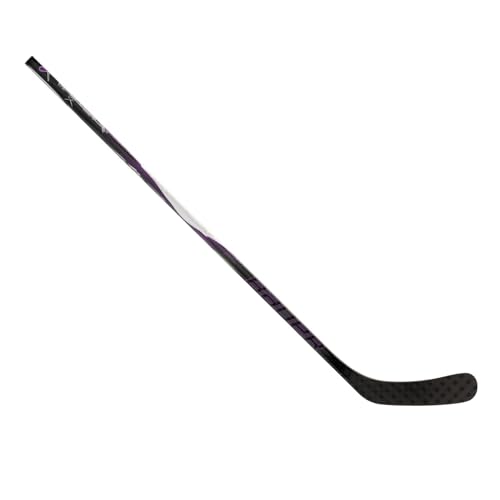
The Vapor Youth is the stick for a child joining a team season, the lightest, softest stick here. Bauer built Vapor for quick hands, and the youth version scales that to a thin shaft and a 20 flex a young player can bend when they shoot. A stick a child can flex lifts the puck, and that is the moment hockey gets fun. The composite build is much lighter than wood, which shows in the third period, when a tired child with a heavy stick stops skating. It costs more than a street or wood stick, but for a child on a team it is worth it.
Specs
- 20 flex, youth size
- Composite construction with a thin youth shaft
- Low kick point for a quick release
- Youth blade patterns P28Y and P92
- Built for small hands and light players, about 40 to 60 lb
- Left and right handed versions listed
Best for: A first team season, for kids about 5 to 8 who need a light composite.
Watch out for: Confirm the listing is the 20-flex youth model and not a junior or intermediate Vapor, which share the name and look alike. The 2023 model has shown out of stock at hockey shops, so confirm a live Amazon offer before you buy, and check the hand and blade curve on the listing.
Fischer CT150 Composite Youth/Junior Hockey Stick

The CT150 is the step-up stick for a child who has outgrown wood and is ready for a composite, the longest, stiffest stick here. At 45 inches and 30 flex, it suits kids about 4 feet to 4 feet 6 inches and 55 to 70 lb, usually ages 6 to 9. The P92 mid curve is the easiest to learn with, and Fischer’s entry composite moves up from wood without a premium price. Heavier than a premium composite, so a child moving up from the Bauer Vapor Youth feels the difference, but for a growing player needing more length and flex, it is the right next stick.
Specs
- 30 flex
- 45-inch length
- P92 mid curve
- Composite and ABS construction
- Right-handed listing, with a left version to check for
- Youth and junior sizing
Best for: Moving up from wood to a first composite, ages 6 to 9.
Watch out for: The listing linked here is right-handed, so check for a left version if your child shoots left. Entry-level composite means it is heavier than premium sticks, and the 45-inch length suits kids 4 feet to 4 feet 6 inches — measure first, since a child under 4 feet will find it too long.
Which One Fits Your Situation
Your child has never played and you want to try it cheap
Buy the Franklin kids street hockey set. Two sticks and a ball cost less than one composite stick, and two players means an instant game in the driveway. If they love it, you have lost nothing, and it still works for driveway games after they move on to ice. If they do not love it, you have spent little and learned a lot. Do not buy a composite ice stick for a child who has never held one.
Your child plays in the driveway every day
Buy the Franklin SX Comp 1010 in the 40-inch youth size. It is built for asphalt, with a wood shaft and a replaceable blade that survives the driveway in a way an ice stick cannot. Check the hand on the listing, accept that the color is assorted, and keep a spare blade in mind for later. When your child asks about the rink, add the Pursuit as their first ice stick.
Your child is joining learn-to-skate or a first team
Buy the Franklin Pursuit for learn-to-skate, or the Bauer Vapor Youth for a team season. The Pursuit is the cheaper first ice stick and the right call when you are not sure the team will stick. The Vapor Youth is the lighter, softer composite for a child who is already on a team and needs a stick they can bend. Either way, measure the length in skates and pick the flex near half their body weight.
Your child has outgrown their first composite
Buy the Fischer CT150. At 45 inches and 30 flex it is the next rung up, and the P92 curve is forgiving enough for a child still learning to shoot. Measure first, because a child under 4 feet will find it too long, and check the hand, since the main listing is right-handed. If your child is still under 4 feet, stay with the Vapor Youth for another season.
Common Mistakes
- Buying a stick to grow into: a stick that is too long and too stiff teaches bad posture and kills shooting, so buy the length that fits today and cut it if it is a little long.
- Picking flex by age instead of weight: flex should sit near half your child’s body weight in pounds, and a stick they cannot bend is a stick they cannot shoot with.
- Using a street stick on ice: the ABS blade is too hard for a puck, most leagues will not allow it, and an ice stick on the driveway will chew through its blade in a few sessions.
- Ordering the wrong hand: confirm left or right on the exact listing, because the same model name often covers both hands and the wrong hand is useless.
- Trusting a single flex number: listings and makers disagree on flex, as the Pursuit shows, so buy for length and weight and treat the flex figure as a guide, not a promise.
Frequently Asked Questions
What size hockey stick does my child need?
Stand the stick upright, toe of the blade on the floor. In shoes, the top should land between chin and nose; in skates, about the chin. For flex, begin near half body weight: a 50 lb child suits 20 to 25 flex, and a 70 lb child suits 30 to 35. A stick that is a little long can be cut down — better than buying long and hoping.
Can my child use a street hockey stick on the ice?
No. A street blade is hard ABS made to survive asphalt, too hard to control a puck on ice. Most leagues will not allow it, and it feels dead in small hands. The reverse is just as bad: an ice stick on the driveway wears through its blade in a few sessions. Buy for the surface your child plays on most, and add the other kind later.
How long will a youth hockey stick last?
A youth stick lasts one to two seasons — that is normal, not a defect. Kids grow fast: a stick that fit last year is often too short and too soft now. Street sticks last longer, the game is gentler, but a blade dragged on asphalt wears down. Check blade and shaft for cracks before each season, and replace one with a loose blade or a cracked shaft.
Should I buy a composite stick for a beginner?
Not for a first try. Begin with a cheap street set or wood stick — first find out whether they like the game. On the ice in learn-to-skate or on a team, a light composite like the Bauer Vapor Youth is worth it — the weight and soft flex make shooting possible. A 30-flex composite like the Fischer CT150 is the next step when they outgrow it, around ages 6 to 9.
FAQ
What size hockey stick does my child need?
Can my child use a street hockey stick on the ice?
How long will a youth hockey stick last?
Should I buy a composite stick for a beginner?
More from Amazon
Programs that pair well with the guide above. Offers and eligibility are set by Amazon and may change.
Free shipping on eligible items, Prime Video and more. Eligible new members can start with a free trial.
Start a Prime free trialAudiobooks and podcasts to listen to on the go. Eligible new members can start with a free trial.
Try Audible freeAd-free music streaming. Eligible new subscribers can start with a free trial.
Try Music Unlimited freeA free business account with business pricing and bulk-buying tools for work, shop or home office.
Create a business accountAs an Amazon Associate we earn from qualifying purchases.

Write Your Review
No reviews yet. Be the first to share your experience!