
Key takeaways
- Five boot dryers that dry thick ski boot liners overnight without cooking them, from silent convection to fast forced air and a travel pick.
Ski boots come off the hill wet, and the real question is not whether to dry them but how fast and how hot. A liner that stays damp overnight turns stiff and cold by first lift, and a liner that smells by day three is a liner that never fully dried. The choice comes down to heat against time: gentle warmth takes all night but treats the foam kindly, while forced hot air finishes in a couple of hours and asks more of the liner material.
This guide is for skiers who dry boots in a rental, a lodge room, or a mudroom at home, and who want the pair ready for the next morning. The five dryers below come from Amazon listing names and specs: a two-pair fan dryer for families, a silent convection unit for shared rooms, a low-cost PTC dryer, a travel insert that runs from a car outlet, and a timer-controlled forced-air dryer.
Quick Picks
As an Amazon Associate we earn from qualifying purchases.
| Product | Best for | Key spec from title |
|---|---|---|
| PEET Advantage Plus | Two pairs dry by morning | Fan and heat, 1-4 hours, built-in timer |
| JobSite Silent | Quiet overnight drying | Fanless convection, 36W |
| KOODER Boot Dryer | A low-cost first dryer | PTC heater, adjustable length |
| DryGuy Travel Dry DX | Ski trips and the car | AC/DC power, 99°F hybrid drying |
| FORLIM Boot Dryer | Timed drying with shut-off | 105-140°F forced air, 24-hour delay timer |
How to Choose
Gentle Heat Beats Fast Heat
Ski boot liners are thick foam, and many are heat-moldable, which means high heat can change their shape instead of just drying them. The safest drying temperatures sit near body warmth: the travel pick in this guide tops out at 99°F, and the forced-air pick at 105°F, both well below the point where liner foam softens. A dryer that runs much hotter may finish sooner, but it risks warping a liner that was molded to your foot. Check the listed maximum temperature before anything else, and treat any dryer that cannot state one as a gamble. Warm air that moves slowly through the liner dries more evenly than a short blast of hot air.
Dry Time Against Your Schedule
Overnight drying and between-session drying are two different jobs. A convection dryer needs eight to twelve hours for a soaked pair, which suits a boot left in the mudroom after dinner and picked up at breakfast. A fan-assisted dryer finishes in one to four hours, which suits a family that skis morning and afternoon and needs the second pair ready by lunch. Match the dryer to the gap you actually have: if your boots only ever dry overnight, speed buys you nothing. If two people share one dryer, capacity matters more than raw speed, because a single-pair unit forces a queue.
Fit: Tubes, Height, and Liners
A dryer only works where its air reaches, so tube length decides whether the toe of a tall ski boot ever dries. Short inserts warm the cuff and leave the toe damp, which is where moisture collects. Look for extension tubes or a tall post design, and confirm the listed tube length against your boot height before ordering. Removable liners dry faster outside the shell, while fixed liners need air pushed deep into the boot. Gloves need their own ports or a separate attachment; a boot-only dryer with no glove port will not dry a wet mitt, no matter how long it runs.
Noise, Power, and Where It Runs
A dryer that hums all night in a shared lodge room is a dryer that gets switched off at midnight, which defeats the point. Fanless convection units run silent and draw little power, often around 36 watts, so they suit bedrooms and thin walls. Fan models move air faster but make noise, and some draw over 200 watts with the heater on. For travel, check the power source: a unit with a 12-volt car adapter dries boots on the drive home, while a mains-only unit waits until you reach the rental. A built-in timer matters more than it sounds, because it stops the unit instead of running it all day.
The 5 Best Options
PEET Advantage Plus

The Advantage Plus is the pick for a household where two pairs of boots come off the hill wet at the same time. It dries two pairs in one to four hours with a fan and a heat setting, or with the fan alone and no heat, and a built-in timer shuts it off when the cycle ends. That combination covers the common ski-trip pattern: boots in after the last run, dry before dinner, and no one waiting for a turn. It also works with PEET DryPorts, sold separately, which extend the unit to gloves, tall boots, waders, and even a hydration bladder.
Specs
- Dries 2 pairs of shoes at once
- Fan-assisted heat or no-heat mode
- Built-in timer
- 220W with heat on
- Compatible with PEET DryPorts, sold separately
- Made in the USA
- 5-year warranty with registration within 10 days
- First available June 18, 2025
Best for: two pairs of boots that need to be dry by the next morning.
Watch out for: the DryPorts for gloves and tall boots cost extra, so confirm which attachments are in the box before ordering; the unit is the priciest pick here, so it only earns its keep if you dry two pairs at once.
JobSite Silent
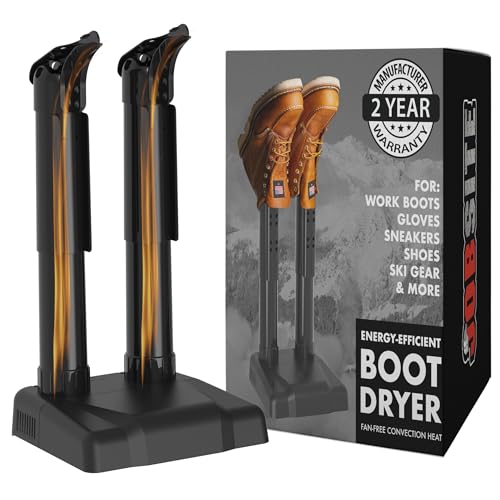
The JobSite Silent is a fanless convection dryer, which makes it the quietest pick in this guide and the easiest to run overnight in a shared room. It uses 36 watts, about the same as a small bulb, and warm air rises naturally through the boot with no fan and no motor. The listed drying times are honest about the trade: warm-up takes about 30 minutes, damp boots take around eight hours, and a soaked pair needs up to twelve. It carries a two-year warranty and comes from a small Michigan business.
Specs
- Fanless convection drying, no motor
- 36W power draw
- Warm-up about 30 minutes
- Damp boots about 8 hours, wet boots up to 12 hours
- Extendable drying tubes for boots or gloves
- Safe for leather, PVC, rubber, neoprene, canvas, and synthetics
- 2-year warranty
- Model 54091
- Item weight 2.6 lb
Best for: overnight drying in a shared room where silence matters.
Watch out for: a 6-pack version of this dryer also circulates, so confirm the listing is the single unit before ordering; twelve hours for a soaked pair means it must go on the dryer the moment you get in, not after dinner.
KOODER Boot Dryer

The KOODER is the low-cost entry point in this guide, a simple plug-in dryer with a PTC heater and precise temperature control. The heating elements slide into the boot and adjust in length to fit different sizes, and the unit is light at 0.61 lb, so it packs into a ski bag without much penalty. It is marketed for odor reduction as well as drying, and the listing notes it is sold by KOODER and shipped by Amazon. For a skier who wants a first dryer for one pair of boots, it covers the basics without the extras.
Specs
- PTC heater with precise temperature control
- Adjustable length to fit different boot sizes
- Item weight 0.61 lb
- Plastic and stainless steel construction
- Model HXQ-02
- Sold by KOODER, shipped by Amazon
Best for: a first dryer for one pair of boots on a tight budget.
Watch out for: the listing describes sustained heat around 70°C, which is hotter than the gentle range in this guide, so check your liner’s heat tolerance before using it on heat-moldable liners; one listing crawl showed no featured offers, so confirm a live offer before ordering.
DryGuy Travel Dry DX
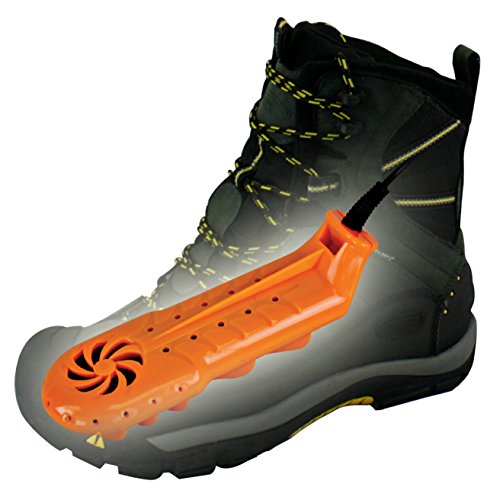
The Travel Dry DX is the pick for the drive home and the flight out, because it is the only dryer here that runs from a car outlet as well as a wall outlet. It combines forced air with convection and heats to 99°F, a gentle temperature that will not harm liner foam, and it dries a pair in two to five hours. The whole unit packs inside a boot or a carry-on, weighs about 1.25 lb, and draws only 13 watts. It is a footwear dryer only, so gloves and socks need another solution.
Specs
- Hybrid forced-air and convection drying
- Heats to 99°F
- Dry time 2-5 hours
- 13 watts
- AC/DC power adapters for home or car use
- Item weight about 1.25 lb
- Part number 02140
- Packs inside boots or carry-on luggage
- Safe for fragile materials
Best for: ski trips where boots dry in the car or a hotel room.
Watch out for: the low heat means a soaked pair takes the full five hours, so plug it in the moment the boots come off; it is not made for gloves or socks, so do not expect it to dry a wet mitt.
FORLIM Boot Dryer

The FORLIM is the timer-controlled pick, with a 24-hour delay timer and an automatic shut-off that let you set drying around your day instead of watching the unit. It warms air and moves it with forced air at 105°F to 140°F, drying footwear in one to two hours, and it includes over-temperature protection that cuts in if the unit gets too hot. The folding design and smart panel keep the controls simple, and the listing describes it as a portable glove dryer and boot warmer as well as a boot dryer.
Specs
- Forced-air drying at 105°F-140°F
- Dry time 1-2 hours
- Over-temperature protection
- 24-hour delay timer
- Automatic shut-off timer
- Folding design
- Smart panel controls
- Portable glove dryer and boot warmer
Best for: skiers who want to set a timer and walk away.
Watch out for: the top of its temperature range is hotter than the gentle picks in this guide, so use the lower settings on heat-moldable liners; confirm the listing is the upgraded temperature-control model, not a lighter FORLIM variant.
Which One Fits Your Situation
Two Pairs After a Full Day
Two pairs of wet boots and one evening call for the PEET Advantage Plus, because it dries two pairs in one to four hours and the timer stops it. The DryGuy Travel Dry DX can cover the second pair if one person dries at home and the other in the car, but that splits the job across two units. A single-pair dryer forces a queue, which means someone skis in damp boots. Buy capacity first when the household skis together.
A Shared Lodge Room
When the dryer runs a few feet from a sleeping skier, the JobSite Silent is the honest pick, because fanless convection makes no noise at all and 36 watts barely registers on the room’s power. The PEET Advantage Plus and the FORLIM both use fans, and the hum in a quiet room can wake a light sleeper. Set the JobSite going the moment boots come off, because twelve hours for a soaked pair leaves no slack.
A Trip With Flights and a Rental Car
The DryGuy Travel Dry DX earns its place here, because it packs inside a boot, weighs 1.25 lb, and runs from the car’s 12-volt outlet on the drive back to the rental. The KOODER is light too, but it needs a wall outlet and runs hotter, a poor match for liners you cannot replace on the road. Leave the two-pair units at home: they are built for a mudroom, not a suitcase, and their weight eats into luggage allowance.
One Pair and a Tight Budget
The KOODER is the pick when the budget is small and only one pair of boots needs drying. It costs less than the rest of the guide, plugs in with no setup, and adjusts to fit the boot. The trade is heat: its listed temperature runs hotter than the gentle picks, so use it with care on heat-moldable liners and confirm a live offer. If the budget stretches a little further, the JobSite Silent is the safer overnight choice.
Common Mistakes
- Cranking the heat to dry faster, which warps heat-moldable liners instead of drying them evenly.
- Leaving the liners inside the shell while drying, which traps moisture between liner and shell.
- Buying a dryer whose tubes are too short for tall ski boots, so the toe stays damp while the cuff dries.
- Running a dryer with no timer all day, which wastes power and keeps heat on boots that are already dry.
- Expecting a boot-only dryer to dry gloves and socks, which need their own ports or a separate unit.
Frequently Asked Questions
How long do ski boot liners take to dry?
A damp liner dries in eight hours on a gentle convection dryer, while a soaked pair can need up to twelve. Fan-assisted dryers finish the job in one to four hours, and a travel insert takes two to five. Thick foam holds water deep inside, so the air must reach the toe and keep moving. Pulling the liner out of the shell cuts the time, because air reaches both sides.
Can a boot dryer damage heat-moldable liners?
Yes, if the heat runs too high. Heat-moldable liners are shaped with warmth, so a dryer that pushes well past body temperature can soften and shift the fit. Stick to dryers that list a maximum near 99°F to 105°F, and use the lower settings on any dryer with a hotter range. Gentle heat over more hours is the safe trade.
Should I remove the liners before drying?
Yes, whenever the liner comes out. Air reaches the inside of the liner and the shell at the same time, which cuts drying time and stops moisture from sitting between the two layers. Fixed liners need a dryer with tubes long enough to push air deep into the toe. Either way, loosen the buckles and open the shell so air can move through the boot.
Can I use a boot dryer in the car?
Only a dryer with a 12-volt car adapter, such as the travel pick in this guide. Mains-only dryers need a household outlet and will not work from a car socket without an inverter, which most skiers do not carry. The car is a good drying spot on the drive home, but secure the unit so it does not slide around.
FAQ
How long do ski boot liners take to dry?
Can a boot dryer damage heat-moldable liners?
Should I remove the liners before drying?
Can I use a boot dryer in the car?
More from Amazon
Programs that pair well with the guide above. Offers and eligibility are set by Amazon and may change.
Free shipping on eligible items, Prime Video and more. Eligible new members can start with a free trial.
Start a Prime free trialAudiobooks and podcasts to listen to on the go. Eligible new members can start with a free trial.
Try Audible freeAd-free music streaming. Eligible new subscribers can start with a free trial.
Try Music Unlimited freeA free business account with business pricing and bulk-buying tools for work, shop or home office.
Create a business accountAs an Amazon Associate we earn from qualifying purchases.
Write Your Review
No reviews yet. Be the first to share your experience!