
Key takeaways
- Wide feet and winter trails need boots with a roomy forefoot, waterproofing, and real insulation. Here are five wide-fit boots built for snowy trails.
A wide foot changes the winter boot decision completely. A hiking boot that feels fine in summer pinches hard once you add a thick merino sock, and a pinched forefoot goes numb fast in the cold because blood cannot move through a squeezed foot. The choice is not simply warm versus light. It is a labeled Wide fitting against a boot that only runs roomy, insulation that suits your pace, and a hiking outsole that still grips when the trail turns to packed snow and ice.
This guide is for hikers with wide forefeet who walk snowy trails, snowshoe approaches, and frozen ridgelines instead of standing around a campfire. Four of the five boots here are insulated, one is not, and the products were chosen from the names and specs on their Amazon listings, with the width of each boot checked against the listing itself.
Quick Picks
As an Amazon Associate we earn from qualifying purchases.
| Product | Best for | Key spec from title |
|---|---|---|
| Oboz Bridger Insulated 8″ B-DRY | Wide feet on long snowy hikes | 200g insulation, Wide sizes |
| Merrell Thermo Chill Mid Waterproof | Light insulated miles at a quick pace | 200g insulation, Wide sizes |
| Merrell Moab 3 Mid Waterproof Wide | Fast hiking in mild winter | Wide fit, Vibram outsole |
| Columbia Bugaboot III Wide | Deep snow on a budget | 200g insulation, Wide sizes |
| Salomon Toundra Pro CSWP | Extreme cold, standing still | Aerogel insulation to -40°C |
How to Choose
Labeled Wide Versus a Roomy Last
A labeled Wide is a size, not a feeling. On Amazon it shows up as a width option in the size selector, usually marked Wide or 2E, and it means the forefoot of that boot is built wider. A boot that runs roomy has a generous last in every width, which helps some wide feet and not others. The two are not the same, and a roomy medium will squeeze a wide foot once a thick sock goes in. Four boots in this guide are sold in a labeled Wide. One is not, and its section says so plainly. Before ordering, open the size selector and confirm Wide is listed for your size, because some sizes sell only in medium.
How Much Insulation You Actually Need
Insulation is measured in grams, and 200g is the sweet spot for active winter hiking. It keeps feet warm while you are moving without turning the boot into an oven on a climb. Four hundred grams and up belongs to boots for standing still, ice fishing, or shoveling, and wearing that much insulation on a hike means sweaty socks, and sweaty socks go cold the moment you stop. An uninsulated waterproof boot can work in winter too, if you keep moving and wear a thick merino sock, but it has no margin for a long lunch break in the snow. Match the grams to your pace, not to the coldest day on the forecast.
Waterproofing That Holds in Slush
A winter hiking boot meets slush, creek crossings, and wet snow that melts against warm leather, so the membrane matters as much as the insulation. A waterproof bootie inside the upper keeps water out even when the outer leather soaks through, while a leather-only boot relies on a surface treatment that wears off over a season. Seam-sealed construction matters too, because water finds stitching before it finds leather. Look for a gusseted tongue as well, since a low tongue lets snow in from the front on every deep step. Gaiter hooks or D-rings are a bonus for deep snow days.
Outsole Grip on Ice and Packed Snow
Lug depth and rubber compound decide whether a winter hiking boot grips or skates. Deep, widely spaced lugs shed snow instead of packing it into a smooth sole, and a winter-tuned rubber stays flexible in the cold where a summer compound turns hard and slick. No hiking boot grips glare ice on its own, so treat microspikes as part of the system for icy trails rather than a sign that the boot failed. A stiff shank helps on frozen, rutted ground by keeping the foot from twisting, while a softer, more flexible sole feels better on rolling snow-covered trails.
The 5 Best Options
Oboz Bridger Insulated 8″ B-DRY

The Bridger Insulated is the wide-foot pick in this guide, and the reason is simple: Oboz builds it in Regular and Wide, and its forefoot last is already generous before you even reach for the Wide option. The 8-inch shaft keeps deep snow out of the collar, the nubuck leather upper sheds slush, and the 200g Freeze Guard insulation is the right weight for active winter miles. It is a substantial boot, heavier than a three-season hiker, and it feels firm underfoot for the first few miles, but the warmth and the fit are what wide-footed hikers keep coming back to.
Specs
- 200g Freeze Guard insulation
- B-DRY waterproof membrane
- Waterproof nubuck leather upper
- O FIT Insole Thermal
- Trail Tread outsole with winter compound rubber
- TPU chassis and nylon shank
- Molded rubber toe cap
- Gaiter D-rings
Best for: Wide feet on long snowy hikes where warmth and support matter more than weight.
Watch out for: The pinned listing is a medium-width child, so confirm Wide in the size selector before ordering. The boot runs firm at first and needs a few miles to soften.
Merrell Thermo Chill Mid Waterproof
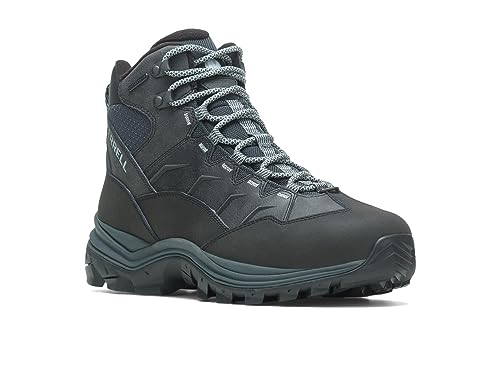
The Thermo Chill is the lightest insulated boot here, and it feels like a hiking boot that happens to be warm rather than a snow boot that happens to walk. The 200g of low-bulk insulation sits inside a mid-height leather and mesh upper, the M Select DRY membrane keeps slush out, and the 5mm lugs bite into soft snow without feeling clumsy on bare trail. Wide sizes are sold in the black colorway, which is the one to confirm in the selector. It is the pick for hikers who move fast and want insulation without carrying a heavy boot.
Specs
- 200g M Select WARM low-bulk insulation
- M Select DRY waterproof membrane
- PU-coated leather and mesh upper
- M Select GRIP outsole with 5mm lugs
- Kinetic Fit BASE contoured insole
- EVA midsole with nylon arch shank
- 6-inch collar height
- About 1 lb 14 oz per pair
Best for: Fast winter hiking where a light insulated boot beats a heavy one.
Watch out for: The 6-inch collar is short for deep snow, so pair it with gaiters on powder days. Confirm the Wide width in the black colorway, since other colors sell fewer wide sizes.
Merrell Moab 3 Mid Waterproof Wide

The Moab 3 is the only uninsulated boot in this guide, and it earns its place because not every winter hike needs insulation. On mild winter days, on packed trails, and on hikes where you keep a steady pace, a waterproof hiking boot with a thick merino sock is warmer than people expect, and it never overheats on a climb. The Wide fitting is labeled, the Vibram outsole grips well on wet rock and frozen dirt, and the Bellows Flex in the forefoot lets the boot bend naturally with your stride. It is the most trail-like boot here, and the lightest.
Specs
- M Select DRY waterproof membrane
- Vibram TC5+ outsole
- Bellows Flex forefoot
- Kinetic Fit Advanced footbed
- Pigskin leather and mesh upper
- Mid-height ankle support
- Labeled Wide fitting
Best for: Mild winter days and fast hiking where insulation would overheat your feet.
Watch out for: No insulation means no margin for long stops in deep cold, so carry an extra sock layer on slow days. Confirm the Wide child in the selector, since the listing mixes medium and wide sizes.
Columbia Bugaboot III Wide

The Bugaboot III is the most snow-boot-like pick in this guide, and the most forgiving on the wallet. It is a tall, sturdy boot with 200g of insulation, a reflective Omni-Heat lining, and a waterproof leather upper over an injection-molded shell that keeps slush out of the lower boot. The Wide fitting is labeled and runs through most sizes, which is rare at this level. It is heavier and stiffer than a hiking boot, so it suits packed trails, snowshoe approaches, and days when the snow is deep enough to need the height.
Specs
- 200g insulation
- Omni-Heat reflective lining
- Waterproof leather upper
- Injection-molded rubber shell
- Omni-Grip outsole
- Labeled Wide fitting
- Mid-calf shaft height
Best for: Deep snow and packed winter trails on a budget.
Watch out for: The stiff shell and tall shaft feel clumsy on technical, rocky ground, so this is a snow boot first and a hiking boot second. Confirm the Wide width in the selector, since the listing also sells medium sizes.
Salomon Toundra Pro CSWP

The Toundra Pro is the coldest boot in this guide by a wide margin, and it exists for the days when the temperature drops far below freezing and you are not moving fast enough to generate heat. Aerogel insulation rated to minus 40 degrees sits inside a leather and synthetic upper, the ClimaSalomon waterproof bootie keeps meltwater out, and the Contagrip outsole holds on packed snow. The toe box is roomy for a Salomon, but this boot is not sold in a labeled Wide, so wide-footed buyers should try it on first or size up half a size with a thick sock.
Specs
- Aerogel insulation rated to -40°C
- ClimaSalomon waterproof bootie
- Leather and synthetic upper
- Contagrip outsole
- OrthoLite insole
- Roomy toe box for the brand
Best for: Extreme cold and slow days when warmth matters more than anything else.
Watch out for: Not a labeled Wide, so confirm the fit before a long hike. One recent check found no Buy Box on Amazon US, with only a single third-party seller, so confirm a live offer before ordering.
Which One Fits Your Situation
You Hike Snowy Trails Most Weekends
Pick the Oboz Bridger Insulated. The Wide fitting is real, the 200g insulation matches a full day of moving in the cold, and the 8-inch shaft keeps snow out on unbroken trail. It is heavier than the Merrells, but on a long hike the support and warmth matter more than a few ounces, and the firm feel softens after the first few outings.
You Move Fast and Hate Heavy Boots
Pick the Merrell Thermo Chill Mid. It is the lightest insulated boot here, the low-bulk insulation never feels like a pillow strapped to your foot, and the mid-height cut lets your ankle move naturally on rolling trails. Just add gaiters when the snow gets deep, since the collar sits lower than the Oboz or the Columbia.
You Run Hot and the Cold Rarely Bites
Pick the Merrell Moab 3 Mid Waterproof Wide. If your feet sweat in insulated boots and you keep a steady pace, an uninsulated waterproof hiker with a thick merino sock is the honest answer. The labeled Wide fitting and the Vibram grip make it the most trail-like boot here, and it doubles as a shoulder-season boot when the snow melts.
You Stand Around in Deep Cold
Pick the Salomon Toundra Pro CSWP, or the Columbia Bugaboot III Wide if the Salomon does not fit your forefoot. The Toundra Pro is built for minus 40 degrees and slow days, while the Bugaboot gives you a labeled Wide and 200g of insulation for far less bulk. Either way, this is the slot for insulation over agility.
Common Mistakes
- Sizing up in length instead of width, which leaves the heel slipping while the forefoot still pinches
- Trusting the word “wide” in a listing title without checking that Wide is actually an option in the size selector
- Wearing cotton socks, which hold sweat against the skin and go cold the moment you stop moving
- Buying 400g insulation for active hiking, then overheating, sweating, and ending up colder than in a 200g boot
- Skipping gaiters in deep snow, so the collar fills up and the insulation soaks from the inside
Frequently Asked Questions
Do I need a Wide width or just a bigger size?
A bigger size adds length, not width, so the forefoot still pinches while the heel slips. A labeled Wide adds room across the ball of the foot, where wide feet need it. If your heel fits in your normal size, order that length in Wide. If the boot has no Wide option, a roomy last or a half size up with a thin sock is the fallback, not the fix.
Is 200g of insulation enough for winter hiking?
For active hiking, yes. Two hundred grams keeps feet warm while you are moving, and it does not overheat on climbs the way 400g does. It is not enough for standing still in deep cold, which is a different job that belongs to a heavier boot or an insulated overboot. Pair 200g boots with a medium-weight merino sock, and carry a thicker spare pair for lunch stops.
Can I wear uninsulated hiking boots in snow?
Yes, on mild days and at a steady pace. A waterproof membrane plus a thick merino sock handles packed trails and light snow well, and the boot stays lighter and more flexible than an insulated one. The limit is a long stop or a cold day, when an uninsulated boot has no warmth reserve. If you stop often or the temperature drops well below freezing, switch to an insulated boot.
Why do my toes still get cold if the boot fits?
Cold toes usually mean a squeezed forefoot, a wet sock, or a boot too tight once a thick sock goes in. Loosen the laces over the forefoot, switch to a dry merino sock at lunch, and check that your toes can wiggle. If the boot fits but the toes still chill, the insulation may be too light for your pace, or the sock may be cotton holding sweat.
FAQ
Do I need a Wide width or just a bigger size?
Is 200g of insulation enough for winter hiking?
Can I wear uninsulated hiking boots in snow?
Why do my toes still get cold if the boot fits?
More from Amazon
Programs that pair well with the guide above. Offers and eligibility are set by Amazon and may change.
Free shipping on eligible items, Prime Video and more. Eligible new members can start with a free trial.
Start a Prime free trialAudiobooks and podcasts to listen to on the go. Eligible new members can start with a free trial.
Try Audible freeAd-free music streaming. Eligible new subscribers can start with a free trial.
Try Music Unlimited freeA free business account with business pricing and bulk-buying tools for work, shop or home office.
Create a business accountAs an Amazon Associate we earn from qualifying purchases.
Write Your Review
No reviews yet. Be the first to share your experience!