
Key takeaways
- Compare the best ski wax for every condition, from all-temperature bars and cold-weather bricks to rub-on sticks and liquid glide wax for quick touch-ups.
A dry, unwaxed base drags on snow, feels grabby in turns, and wears faster than a base that is kept fed with wax. The fix is simple, but the shelf at the ski shop is not: bars are sold by temperature band, by application method, and by formula, and every maker prints its ranges a little differently. Picking the right ski wax starts with knowing how cold or warm the snow will be, how much time you want to spend at the tuning bench, and whether you prefer an ironed-in hot wax or a quick rub-on or liquid layer.
This guide compares five well-known glide waxes that cover the main buying decisions. It includes a big all-temperature brick that can be rubbed on or ironed on, a hard cold-weather brick, a soft warm-weather bar, a pocket rub-on stick, and a liquid glide wax with a built-in applicator. Every temperature range, weight, and application note below is stated the way the maker states it, so check the range printed on any wax against the conditions you actually ski.
As an Amazon Associate, we earn from qualifying purchases.
How to Choose
Start with temperature. Glide waxes are blended hard or soft to suit a band of temperatures. Hard waxes are made for cold, dry snow, where sharp snow crystals create a lot of friction, while soft waxes are made for warm, wet snow near or above freezing. All-temperature waxes sit in the middle and trade a little peak performance at the extremes for one product that works across a whole season. Note that makers do not all measure the same thing: Swix prints air temperatures in the shade for its PS and HS lines, while PURL prints snow temperatures for its bricks, so compare each range in the terms the maker intends rather than lining the numbers up directly.
Next, choose an application method. Hot waxing with an iron melts wax into the base, and makers generally present it as the most durable option; it calls for an iron, a scraper, brushes, and a ventilated workspace. Rub-on wax is crayoned onto the base and buffed in with a cork, which suits touch-ups at the lodge or in the parking lot. Liquid glide wax is spread with a sponge applicator, left to dry, and polished, which makes it the fastest route of the three. Many skiers combine methods, hot waxing at home and carrying a rub-on or liquid for mid-trip refreshes.
Finally, look at the formula. Several makers now state plainly that a wax is fluorocarbon-free, PFAS-free, or biodegradable, and fluoro products have been phased out of most race circuits and many recreational lines. If low-impact ingredients matter to you, the listings below note each formula exactly as its maker describes it. Whatever you buy, follow the maker’s directions for iron temperature, cooling time, scraping, and brushing, and never leave a hot waxing iron unattended.
Hertel Super HotSauce All Temperature Ski and Snowboard Wax

Hertel has sold its Super HotSauce formula since the early 1970s, and it remains the classic one-brick answer for skiers who do not want to track temperature bands. Hertel states a working range of 6 to 52 degrees Fahrenheit, which covers everything from a cold midwinter morning to a soft spring afternoon. The 340 gram brick is roughly twice the size of a standard training bar, so a single purchase covers many applications across a season.
The flexible part is application. Hertel says the wax can be rubbed on for a quick cold application or ironed on as a hot wax, and the maker states that one ounce can give up to three full days on the slopes. The formula is described by Hertel as non-fluorocarbon and non-PTFE, and biodegradable. For skiers and snowboarders who wax a household fleet of skis and boards, this is the straightforward bulk pick: one product, one wide stated range, and no colour chart to consult before a trip.
Specs
- Weight: 340 g (12 oz)
- Temperature range: 6 to 52 degrees Fahrenheit, as Hertel states
- Application method: rub on or iron on
- Formula: non-fluorocarbon and non-PTFE, biodegradable, as the maker states
- Extras: made in the USA; five scored mini bars in one brick
PURL Blue Winter Ski and Snowboard Wax

PURL is a small family-run maker in Colorado that hand-pours its waxes, and its Blue brick is the cold-weather specialist in the line. PURL rates the Blue blend for snow temperatures from 5 to 20 degrees Fahrenheit, the hard, dry, squeaky snow of deep winter. A hard wax matters in that band because soft waxes grip cold crystals and feel slow, while a hard formula is built to slide over them.
The brick is a full pound, which is generous for a temperature-specific wax, and it is applied as a hot wax: crayon or drip it on, iron it in, let it cool, then scrape and brush, following PURL’s directions. PURL states that its waxes contain no fluoros, PFOAs, or PFCs and are made from non-toxic, biodegradable blends, and the company notes membership in one percent for the Planet. Skiers who spend most of the season in genuinely cold conditions, and who want a fluoro-free cold wax in bulk, are the natural audience for this brick.
Specs
- Weight: 454 g (1 lb)
- Temperature range: snow temperatures of 5 to 20 degrees Fahrenheit, as PURL states
- Application method: hot wax with an iron
- Formula: no fluoros, PFOAs, or PFCs, as the maker states
- Extras: hand-poured in Colorado, USA; biodegradable microcrystalline blend
Swix HS10 Yellow High Speed Glide Wax

At the warm end of the scale sits Swix HS10 Yellow, the warmest bar in the maker’s fluoro-free HS line. Swix rates HS10 for air temperatures from 32 to 50 degrees Fahrenheit, or 0 to plus 10 degrees Celsius, which is spring-skiing territory: wet, transformed snow, sunny afternoons, and end-of-season slush. A soft wax like this is blended to keep gliding when the snow holds a lot of water and stiffer cold waxes start to feel sticky.
The 60 gram bar is the small size in the line, with larger 180 gram and 900 gram options in the maker’s catalogue for teams and workshops. Swix directs an iron temperature of 248 degrees Fahrenheit, or 120 degrees Celsius, and describes HS10 as a training and racing wax that also works well as a base preparation wax for warm-weather skis. Because Swix prints air temperature in the shade for this line, match the forecast air temperature, not the snow temperature, when deciding whether HS10 is the bar for the day.
Specs
- Weight: 60 g
- Temperature range: air temperatures of 32 to 50 degrees Fahrenheit (0 to plus 10 degrees Celsius), as Swix states
- Application method: hot wax; Swix directs an iron temperature of 248 degrees Fahrenheit (120 degrees Celsius)
- Formula: fluoro-free, as Swix states
- Extras: also sold in 180 g and 900 g sizes in the maker’s catalogue
ZUMWax Rub-On Ski and Snowboard Wax, Universal
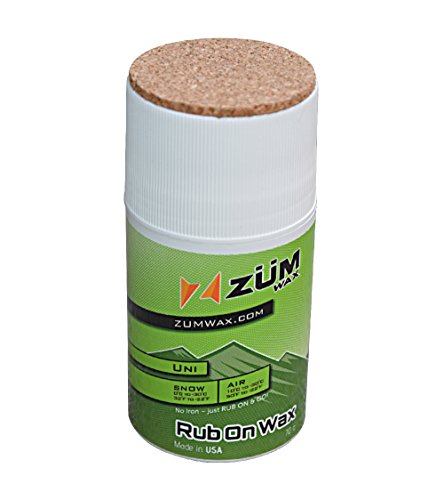
ZUMWax built its name on this pocket format: a 70 gram push-up stick of universal rub-on wax with a cork attached for buffing. There is no iron, no scraping, and no bench involved. The maker’s directions are to rub the wax onto the base and then polish it in with the cork, which makes it a realistic mid-day fix when bases start to look white and dry at the edges, or a travel option for skiers who rent accommodation without a tuning space.
ZUMWax lists the Universal version for all conditions rather than a narrow temperature band, and describes the formula as PFAS-free, with a vanilla scent the brand treats as a signature. The stick format keeps wax off gloves and packs flat in a jacket pocket. It will not replace a proper hot wax for durability, and ZUMWax itself positions its iron-on waxes as the home base layer with the rub-on used between sessions, but as a carry-anywhere glide refresher for skis, snowboards, and Nordic skis, this is the convenient pick.
Specs
- Weight: 70 g
- Temperature range: universal, for all conditions, as ZUMWax states
- Application method: rub on, then buff with the attached cork
- Formula: PFAS-free, as the maker states
- Extras: push-up container, vanilla scent, made in the USA
Swix F4 Liquid Glide Wax

Swix F4 Liquid is the speed option in this line-up. It comes in a 100 millilitre pocket bottle with a built-in sponge applicator: press the sponge to the base, spread a thin layer, let it dry, and polish. Swix directions relayed by retailers suggest letting the layer dry for about three minutes before polishing with a nylon brush or polishing cloth. No iron and no scraping are involved, so a full refresh takes minutes rather than a bench session.
Swix describes F4 as a glide wax for all snow conditions, aimed at skiers and snowboarders who want one simple product for alpine, Nordic, and board bases alike. The same directions note that F4 can be applied to the metal edges of skis or a snowboard before storage to help protect them from rust. Liquid layers wear faster than ironed-in hot wax, so treat this as the quick-turnaround choice for rental fleets, family ski days, and last-minute departures rather than a once-a-season treatment.
Specs
- Size: 100 ml
- Temperature range: all snow conditions, as Swix states
- Application method: built-in sponge applicator; let dry, then polish
- Formula: liquid glide wax
- Extras: pocket size; Swix also directs use on metal edges before storage
Comparison
The five waxes divide cleanly by job. For one product that covers most of a season, the Hertel Super HotSauce brick has the widest maker-stated temperature range and can be rubbed on or ironed on. For deep-winter cold, the PURL Blue brick is the dedicated hard wax, and for spring warmth, Swix HS10 Yellow is the dedicated soft wax. The ZUMWax stick and the Swix F4 Liquid skip the iron entirely, trading durability for speed and pocketability.
| Product | Type | Maker-stated range | Application |
|---|---|---|---|
| Hertel Super HotSauce All Temperature | All-temperature glide wax | 6 to 52 degrees Fahrenheit | Rub on or iron on |
| PURL Blue Winter Wax | Cold-temperature wax | Snow at 5 to 20 degrees Fahrenheit | Hot wax with iron |
| Swix HS10 Yellow | Warm-temperature wax | Air at 32 to 50 degrees Fahrenheit | Hot wax with iron |
| ZUMWax Rub-On Universal | Rub-on wax | All conditions | Rub on, buff with cork |
| Swix F4 Liquid Glide Wax | Liquid glide wax | All snow conditions | Sponge applicator, dry, polish |
FAQ
How often should skis be waxed?
Makers generally suggest waxing when the base starts to look dry, white, or grey along the edges, and after several days of skiing. Hertel states that one ounce of Super HotSauce can last up to three full days on the slopes, while quick rub-on and liquid layers are usually refreshed more often, sometimes daily on a trip.
What is the difference between hot wax and rub-on wax?
Hot wax is melted into the base with an iron, cooled, scraped, and brushed, and makers present it as the more durable treatment. Rub-on wax is crayoned onto the surface and buffed in with a cork or pad. It goes on in minutes anywhere, including at the lift, but sits on the surface rather than soaking in, so it wears off sooner.
Does a wax temperature range refer to air or snow temperature?
It depends on the maker, which is why this guide quotes each range in the maker’s own terms. Swix prints air temperatures in the shade for its PS and HS waxes, while PURL prints snow temperatures for its coloured bricks. Read the packaging of the wax in your hand and match the reading the maker intends.
Are fluorocarbon ski waxes still common?
Much less than they were. Fluoro waxes have been removed from major race circuits, and most recreational lines are now fluoro-free. Every wax in this guide is described by its maker as fluorocarbon-free, PFAS-free, or non-fluorocarbon, so check the listing wording if a fluoro-free formula is a priority for you.
Final Verdict
Most recreational skiers can cover a season with two products: one ironed-in wax matched to their usual conditions and one pocket format for touch-ups. If you want a single purchase to handle almost everything, the Hertel Super HotSauce brick pairs the widest stated range with rub-on or iron-on flexibility. Cold-climate skiers should look at the PURL Blue brick, spring skiers at Swix HS10 Yellow, and anyone who values speed of application above all else at the ZUMWax rub-on stick or the Swix F4 Liquid. Match the maker’s stated range to your snow, follow the maker’s application directions, and your bases will stay slick and protected all winter.
Product and ASIN Reference
| Product | ASIN |
|---|---|
| Hertel Super HotSauce All Temperature Ski and Snowboard Wax, 340 g | B000GAYNXO |
| PURL Blue Winter Ski and Snowboard Wax, 1 lb | B074ZJ8JVP |
| Swix HS10 Yellow High Speed Glide Wax, 60 g | B08GRG5W4G |
| ZUMWax Rub-On Ski and Snowboard Wax, Universal, 70 g | B00G0Q55DK |
| Swix F4 Liquid Glide Wax, 100 ml | B00O4H6GRQ |
More from Amazon
Programs that pair well with the guide above. Offers and eligibility are set by Amazon and may change.
Free shipping on eligible items, Prime Video and more. Eligible new members can start with a free trial.
Start a Prime free trialAudiobooks and podcasts to listen to on the go. Eligible new members can start with a free trial.
Try Audible freeAd-free music streaming. Eligible new subscribers can start with a free trial.
Try Music Unlimited freeA free business account with business pricing and bulk-buying tools for work, shop or home office.
Create a business accountAs an Amazon Associate we earn from qualifying purchases.
Write Your Review
No reviews yet. Be the first to share your experience!