
Key takeaways
- Compare the best ice fishing spud bars, from long two-piece chisels to light budget picks, with length, weight, head design, and safety tips explained.
A spud bar is the first tool that touches the ice on any trip, and it is the one that tells you whether the next step is safe. Before you haul a shelter, an auger, and a bucket of gear onto a frozen lake, you need a heavy steel bar that can punch through thin spots and report back with a dull thud or a splash. A good spud bar does two jobs at once: it tests ice thickness as you walk, and it opens old holes that froze over overnight. The wrong bar is either too light to bite or too long to carry.
This guide covers early-season anglers checking new ice, regulars reopening holes at a favorite spot, and anyone who fishes alone and wants a margin of safety. Every bar below was picked from its Amazon listing, using the length, weight, head design, and handle details printed there, so you can match the bar to the ice you fish and the way you travel.
Quick Picks
As an Amazon Associate we earn from qualifying purchases.
| Product | Best for | Key spec from title |
|---|---|---|
| Eskimo CH12 64-Inch Multi-Faceted Ice Chisel | Longest reach on thick ice | 64 inches, two-piece design |
| Eskimo CH11 59.5-Inch Multi-Faceted Ice Chisel | One-piece strength for daily use | 59.5 inches, 11 pounds |
| Eskimo CH7 52.5-Inch Single-Action Ice Chisel | Light carry for checking ice on foot | 52.5 inches, 4.5 pounds |
| Thunderbay Heavy Duty Steel Chisel | Simple heavy steel at a low weight | Heavy-duty steel construction |
| Tie Down Heavy Duty Roofer and Ice Spud Bar | A bar that doubles as a work tool | 54.5-inch pole, 3.5-inch blade |
How to Choose
Length and Weight
Length decides how far ahead of your boots the bar can test, and weight decides how hard each strike hits. A 64-inch bar lets a tall angler sound the ice well ahead of every step, while a 52-inch bar suits shorter anglers and tight sleds. Heavier bars near 11 pounds punch through thick ice with fewer swings, but they tire your arms on a long walk to the spot. Lighter bars near 4.5 pounds are easy to carry all day, yet they need more strikes to break the same ice. Match the length to your height and the weight to the ice thickness you expect, then check that the bar still fits your sled or vehicle.
Chisel Head Design
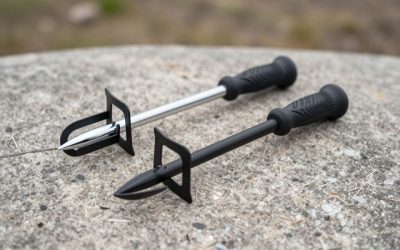
The head is where the work happens, and its shape changes how the bar bites. Multi-faceted heads with stepped or triple-action edges chip away larger pieces with each strike, so thick ice opens faster and with less effort. Single-action heads have one flat blade that shaves and shapes ice cleanly, which suits reopening holes and trimming edges rather than punching fresh holes. Hammer-style heads add a flat striking face for freeing frozen tip-ups or shelter stakes. Look at the head first when the ice in your area is usually thick, and pick a wider, stepped head when you expect to open holes by hand.
Handle Grip and Safety Rope
A spud bar is useless if it slips from your grip or slides down a hole, so the handle and tether matter as much as the head. Foam grips cushion the shock of each strike and stay comfortable in gloves, while rubberized grips hold firm when wet. A wrist tether or safety rope is the cheapest insurance on the ice: tie it on every trip, because a bar that slips from cold hands can vanish through a hole in seconds. Check that the tether is long enough to let you swing freely and strong enough to hold the bar. A knob handle or flared end also stops your hand from sliding down the shaft.
Build Quality and Portability
A spud bar takes a beating, so fully welded steel construction outlasts bolted or sleeved joints that loosen over a season. Powder-coated finishes resist rust from slush and meltwater, and a blade guard protects the edge and your gear during transport. Two-piece bars break down for a sled or trunk, which helps when space is tight, but the joint must lock solidly before you swing. One-piece bars have no joint to fail, yet they need a longer storage spot. Weigh the convenience of a breakdown design against the confidence of a single welded bar before you choose.
The 5 Best Options
Eskimo CH12 64-Inch Multi-Faceted Ice Chisel

The CH12 is the longest bar in this guide, and that reach is exactly why early-season anglers trust it. At 64 inches it sounds the ice well ahead of your boots, and the triple-action chipper head takes bigger bites than a flat blade, so thick ice opens with fewer swings. The two-piece design breaks down for a sled or trunk, and the foam grips soften the shock of each strike. It suits anglers who walk long distances onto new ice and want the strongest possible warning before each step.
Specs
- 64 inches long, two-piece design with pin attachment
- Triple-action chipper head with multi-faceted cutting edges
- Fully welded steel construction with red powder coat
- Foam grip handles and wrist tether strap included
- Blade guard included for transport and storage
- Weighs 11 pounds
Best for: Anglers who walk onto new ice and want maximum reach and warning before each step.
Watch out for: Confirm the listing shows a current seller before ordering, since availability for this model has varied.
Eskimo CH11 59.5-Inch Multi-Faceted Ice Chisel

The CH11 is the one-piece version of the same idea, and its single welded bar appeals to anglers who distrust joints. At 59.5 inches it still reaches well ahead of your stride, and the triple-action head chips ice fast enough to reopen a frozen hole without an auger. The 11-pound weight drives each strike deep, and the foam grip keeps the vibration down on a cold morning. It suits regulars who fish the same lakes all season and want a bar that simply works every time.
Specs
- 59.5 inches long, one-piece design
- Triple-action chipper head with multi-faceted cutting edges
- Fully welded steel construction with red powder coat
- Foam grip handle and wrist tether strap included
- Balanced weight-to-length ratio for efficient striking
- Weighs 11 pounds
Best for: Regular ice anglers who want a rugged one-piece bar with no joint to loosen.
Watch out for: At 59.5 inches it needs a long storage spot, so measure your sled or trunk first.
Eskimo CH7 52.5-Inch Single-Action Ice Chisel

The CH7 is the lightest full-length bar in this guide, and that lightness is its whole appeal. At 4.5 pounds it rides easily in a sled or across your shoulder on the walk out, and the single-action flat blade shaves ice cleanly when you reopen holes or trim edges. It will not punch thick ice as fast as the heavier Eskimo models, but for checking thickness and light chipping it is enough. It suits budget-minded anglers and anyone who fishes mostly on mid-season ice.
Specs
- 52.5 inches long, one-piece design
- Single-action flat chisel head
- Fully welded steel construction with red powder coat
- Balanced weight-to-length ratio for efficient striking
- Weighs 4.5 pounds
Best for: Anglers who want a light, simple bar for checking ice and reopening holes on a budget.
Watch out for: Confirm the listing shows a current seller before ordering, since availability for this model has varied.
Thunderbay Heavy Duty Steel Chisel

The Thunderbay is a plain heavy steel chisel with no extra features, and that simplicity keeps it dependable. The red finish makes it easy to spot in snow, and the solid steel body takes hard strikes without flexing. It is a straightforward backup bar for anglers who already own an auger but still want a spud for testing ice on the walk in. It also suits anyone who needs a second bar for a fishing partner without spending much.
Specs
- Heavy-duty steel construction
- Red finish for visibility on snow and ice
- Model V1517
- Sold as an ice fishing chisel
Best for: Anglers who want a simple, sturdy backup chisel for testing ice.
Watch out for: Check the listing for the exact length and weight before ordering, since this listing gives fewer details than the Eskimo models.
Tie Down Heavy Duty Roofer and Ice Spud Bar

The Tie Down bar began life as a roofing tool, and its 3.5-inch blade and knob handle transfer well to the ice. At 54.5 inches it sits between the short and long Eskimo bars, and the heavy steel pole shears through ice, packed snow, and frozen slush with authority. The knob handle gives a secure grip with gloves on, and the bar earns its keep at home between trips. It suits anglers who want one heavy bar for the lake and for chores around the house.
Specs
- 54.5-inch pole length
- 3.5-inch blade
- Knob handle for a secure grip
- Heavy-duty steel construction
- Designed for ice work, roofing, and debris removal
Best for: Anglers who want a versatile heavy bar that also works for chores off the ice.
Watch out for: The bar is heavier than purpose-built ice chisels of the same length, so expect more arm fatigue on long walks.
Which One Fits Your Situation
You Walk Onto New Ice Alone
Pick the Eskimo CH12. Its 64-inch reach sounds the ice well ahead of your boots, the triple-action head bites fast, and the wrist tether keeps the bar attached if your grip slips. The two-piece design also breaks down for the sled, so you carry one tool that tests ice and opens holes.
You Fish the Same Lake All Season
Pick the Eskimo CH11. The one-piece welded bar has no joint to loosen, and its 11-pound weight punches through refrozen holes with few swings. The foam grip and tether make it comfortable for daily use, the 59.5-inch length suits most anglers, and the triple-action head keeps frozen holes open without an auger.
You Want the Lightest Bar in the Sled
Pick the Eskimo CH7. At 4.5 pounds it barely adds weight to your load, and the flat blade trims hole edges cleanly. It is the right call when the ice is already thick enough to trust and you mainly need a checker and a hole opener for a day trip.
You Need a Backup Bar or a Work Tool
Pick the Tie Down spud bar or the Thunderbay chisel. The Tie Down doubles as a roofing and debris tool, while the Thunderbay is a plain steel bar that costs little and still tests ice well. Either one keeps you safe without a second auger purchase, and both ride easily in a sled.
Common Mistakes
- Walking onto ice without testing every few steps, even when the ice looked solid from shore.
- Buying a bar that is too light for the thick ice in your area, then struggling to open a single hole.
- Skipping the wrist tether, which is the only thing stopping a slipped bar from vanishing down a hole.
- Storing a wet bar without drying it, which lets rust eat the edge and the joints.
- Using a spud bar to cut clean round fishing holes instead of an auger, which wastes energy and leaves rough edges.
Frequently Asked Questions
How thick should the ice be before I walk on it?
General guidance calls for at least 4 inches of clear, solid ice for a person on foot, and more for groups, snowmobiles, or vehicles. A spud bar helps you check thickness as you go: one hard strike should not break through on safe ice. Always check local reports and never trust a single reading.
How do I test ice with a spud bar?
Strike the ice firmly about three feet ahead of your path, then step forward only if the bar bounces back without breaking through. Repeat the strike with every step, and turn back if the bar punches through or the ice sounds hollow. Keep the tether on your wrist the whole time.
Can a spud bar replace an ice auger?
No, a spud bar is a safety and opening tool, not a hole-cutting tool. It tests thickness, reopens frozen holes, and clears skim ice, but it leaves rough, uneven openings. An auger cuts clean round holes faster and with less effort, so carry both when you plan to fish.
How do I keep a spud bar sharp and rust-free?
Dry the bar after every trip, wipe the edge clean, and apply a light coat of oil before storage. Sharpen the edge with a fine file, following the existing bevel, when it dulls. Keep the blade guard on during transport and store the bar in a dry place.
FAQ
How thick should the ice be before I walk on it?
How do I test ice with a spud bar?
Can a spud bar replace an ice auger?
How do I keep a spud bar sharp and rust-free?
More from Amazon
Programs that pair well with the guide above. Offers and eligibility are set by Amazon and may change.
Free shipping on eligible items, Prime Video and more. Eligible new members can start with a free trial.
Start a Prime free trialAudiobooks and podcasts to listen to on the go. Eligible new members can start with a free trial.
Try Audible freeAd-free music streaming. Eligible new subscribers can start with a free trial.
Try Music Unlimited freeA free business account with business pricing and bulk-buying tools for work, shop or home office.
Create a business accountAs an Amazon Associate we earn from qualifying purchases.
Write Your Review
No reviews yet. Be the first to share your experience!