
Key takeaways
- The best ice fishing line for panfish, walleye and trout, from ice-specific fluorocarbon and braid to dependable mono for hard water and pound-test picks.
Cold water changes how fishing line behaves. Standard line stiffens, coils off the spool, and holds water that freezes in the rod guides, which turns light bites into missed fish. Ice-specific line is built to stay supple and manageable below freezing, and the right choice depends on the species under the hole, the depth, and how clear the water is.
This roundup covers five lines that suit hard-water fishing, from a pure fluorocarbon made for drilled holes to a fused superline for big lake trout. Each pick is described from its published specifications, with notes on where it fits best and where a different line would serve better.
As an Amazon Associate, we earn from qualifying purchases.
Our top picks
Best for: Panfish, finicky walleye, and clear water
Check price on AmazonBest for: Deep-water jigging and bite detection
Check price on AmazonBest for: General jigging, perch, and walleye
Check price on AmazonBest for: Leaders and clear-water jigging
Check price on AmazonBest for: Lake trout, pike, and deep water
Check price on AmazonQuick Answer
For most ice anglers, Seaguar IceX in light test is the best all-around pick for clear water and finicky fish, while Reaction Tackle Ice Braid suits deep water where sensitivity matters most. Berkley Trilene XL is the budget mono for general jigging, FluoroShield covers leader duty, and FireLine Crystal in heavy test handles lake trout and pike.
1. Seaguar IceX Fluorocarbon Fishing Line

Seaguar IceX is the most clearly ice-focused line in this roundup. It is made from pure Seaguar fluorocarbon resins and built for hard water, so it stays soft and supple on the coldest days rather than turning stiff on the spool. That matters when a walleye or crappie barely moves the jig, because a supple line transmits the tap instead of absorbing it.
The low-memory, micro-diameter design also helps with line management inside a shelter, where coils and tangles waste fishing time. Fluorocarbon sinks faster than monofilament and is hard for fish to see underwater, which suits clear lakes and pressured fish. Abrasion resistance is a further strength: drilled holes leave jagged ice edges, and this line is made to stand up to them along with toothy fish.
The 3-pound, 50-yard spool is a good match for panfish and finicky walleye, and it works well as a leader when paired with a braid mainline. The short spool length is the main drawback, since it fills only small ice reels and leaves little spare line. Heavier tests in the same family cover bigger fish, but this light spool is where the line earns its place.
Specs
- Line type: Pure fluorocarbon
- Break strength: 3 pounds
- Spool length: 50 yards
- Color: Clear
- Best for: Panfish, finicky walleye, and clear water
- Tier: Premium
2. Reaction Tackle Ice Braid Fishing Line

Reaction Tackle Ice Braid is an eight-strand braided line made for ice fishing, and it is the sensitivity pick in this roundup. Braid has almost no stretch, so a light bite at depth reaches the rod tip without delay. That makes it a strong choice for deep-water walleye and lake trout, where monofilament stretch can hide the take entirely.
The fluoropolymer and hydrophobic coating repel water, which helps prevent freeze-ups on the line and in the guides. Eight strands of PE fiber give a thin, smooth profile with strong knot integrity, and the 4-pound test measures a slim 0.10 mm in diameter. A thin braid also cuts through the water well, so light jigs sink naturally and stay in the strike zone.
Braid is more visible underwater than fluorocarbon, so pairing it with a short fluorocarbon leader is a sensible setup for clear water. It also needs a careful knot, since braid can slip if the knot is tied dry or rushed.
Specs
- Line type: Eight-strand braided PE
- Break strength: 4 pounds
- Spool length: 150 yards
- Diameter: 0.10 mm
- Color: High-visibility options available
- Best for: Deep-water jigging and bite detection
- Tier: Mid-range
3. Berkley Trilene XL Monofilament Fishing Line
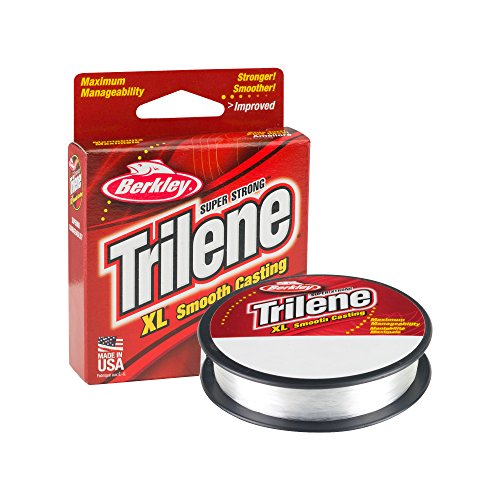
Berkley Trilene XL is the dependable budget mono in this roundup. It is a smooth-casting monofilament with strong knot strength and good wet strength, and the clear color stays discreet under the ice. For anglers who spool several rods for a day on the ice, a forgiving mono that ties easily and handles well is worth more than exotic material.
The 6-pound, 110-yard spool covers a wide range of hard-water fishing, from perch and crappie to walleye. Monofilament has more stretch than braid or fluorocarbon, which cushions the fight and helps keep small hooks pinned when a fish surges under the hole. It is also easy to manage for beginners, since knots seat well and tangles are simple to undo.
Mono does absorb water and can stiffen in extreme cold, so it is not the best choice for the coldest days or the deepest water. Respooling fresh line at the start of the season keeps it performing well. For general jigging in a shelter, it remains a solid and affordable option.
Specs
- Line type: Monofilament
- Break strength: 6 pounds
- Spool length: 110 yards
- Color: Clear
- Best for: General jigging, perch, and walleye
- Tier: Budget
4. Berkley FluoroShield Fishing Line

Berkley FluoroShield is a fluorocarbon-coated line that sits between monofilament and pure fluorocarbon. The fluorocarbon coating adds invisibility and abrasion resistance, while the core keeps the handling and knot strength that mono users expect. That combination makes it a useful leader material and a capable mainline for clear-water jigging.
The 4-pound, 300-yard spool is generous, so one spool fills several ice reels or leaves plenty of spare line for respooling during the season. A long spool is practical for anglers who fish often and change line regularly, since fresh line performs better than line that has sat on a reel all winter. The clear finish keeps the presentation discreet, which helps when fish are line-shy.
FluoroShield is a copolymer rather than pure fluorocarbon, so it does not sink quite as fast or disappear quite as fully as a pure fluorocarbon line. For most panfish and walleye fishing, that difference is minor. It is a mid-range option that balances cost, handling, and stealth.
Specs
- Line type: Fluorocarbon-coated copolymer
- Break strength: 4 pounds
- Spool length: 300 yards
- Color: Clear
- Best for: Leaders and clear-water jigging
- Tier: Mid-range
5. Berkley FireLine Superline Fishing Line

Berkley FireLine Superline in Crystal is the heavy-duty pick in this roundup. It is a thermally fused superline with a near-transparent Crystal color, built for strength and sensitivity in a thin diameter. The fused construction is stiffer than woven braid, which helps it handle cold and ice without the limp tangles that soft braid can develop.
The 30-pound, 1500-yard spool is a bulk spool aimed at anglers who target big fish through the ice, such as lake trout and pike, or who respool many reels and tip-ups. Heavy test gives the confidence to fish around sharp ice edges and toothy fish, and the Crystal color stays discreet in clear water. Sensitivity is excellent, so deep bites register clearly.
This is a specialist spool rather than an everyday panfish line. Light-tackle anglers should look at lighter FireLine tests for crappie and bluegill, since 30-pound test is far heavier than finesse fishing needs. For big-fish duty and deep water, though, it is a strong and durable choice.
Specs
- Line type: Thermally fused superline
- Break strength: 30 pounds
- Spool length: 1500 yards
- Color: Crystal
- Best for: Lake trout, pike, and deep water
- Tier: Premium
How to Choose
Start with the species and the water. Panfish and finicky walleye in clear lakes call for light fluorocarbon, either as a mainline or as a leader on braid. Deep-water fishing calls for braid, since its lack of stretch keeps bites readable at depth. General jigging in a shelter suits a budget mono that is easy to tie and forgiving.
Match the test to the fish, not to the biggest fish in the lake. Light line gives lures a natural action and draws more bites, while heavy line costs bites and is only needed for toothy fish or heavy cover. A 2 to 4-pound line suits panfish, 4 to 6-pound covers walleye and perch, and heavier tests are for lake trout and pike.
Consider spool length as well. Short 50-yard spools suit small ice reels and leader duty, while longer spools fill several reels or cover a season of respooling. Finally, think about visibility: clear and low-visibility lines help in clear water, while a high-visibility line helps the angler watch for bites above the hole.
Who Should Skip
Anglers who fish only open water in warm months can skip ice-specific line entirely, since standard line performs well above freezing and costs less. Those who target only tiny panfish with ultralight jigs should also skip the heavy FireLine spool, which is far too strong for finesse presentations.
Braid is a poor fit for anglers who dislike tying careful knots or who fish very shallow, snag-filled water without a leader, since braid is visible and can slip. Pure fluorocarbon is also a poor fit for anyone who wants a single line for every rod, since its short spools and premium tier make bulk respooling costly. Match the line to the job rather than buying one spool for everything.
Frequently Asked Questions
What pound test is best for ice fishing?
For panfish, 2 to 4-pound test is the usual range, since light line lets small jigs move naturally. Walleye and perch generally suit 4 to 6-pound test, while lake trout and pike call for 10-pound test and above. Lighter line draws more bites in clear water, so go as light as the species and cover allow.
Is fluorocarbon or monofilament better on the ice?
Fluorocarbon is better for clear water and finicky fish, since it is hard to see, sinks fast, and resists abrasion from ice edges. Monofilament is better for beginners and general jigging, since it is forgiving, ties easily, and cushions the fight. Many anglers use both, with braid or mono as a mainline and fluorocarbon as a leader.
Do I need a fluorocarbon leader with braid?
A fluorocarbon leader is a good idea in clear water, since braid is more visible and fish can shy away from it. A short leader of 2 to 4 feet gives the stealth of fluorocarbon with the sensitivity of braid. In stained water or low light, braid alone is often fine.
How often should ice fishing line be replaced?
Replace line at least once a season, and sooner if it shows nicks, coils, or memory that will not straighten. Line that has sat on a reel through the summer loses strength and handling. Fresh line is one of the cheapest ways to improve bite detection and reduce lost fish.
Final Verdict
Seaguar IceX is the best overall pick for most ice anglers, thanks to its cold-weather suppleness, low visibility, and abrasion resistance around drilled holes. Reaction Tackle Ice Braid is the best choice for deep water, where its sensitivity makes light bites easy to feel. Berkley Trilene XL is the best budget option for general jigging, FluoroShield is a versatile leader and mainline, and FireLine Crystal in heavy test covers big fish. Pick the line that matches the species, the depth, and the clarity of the water, and respool fresh each season.
FAQ
What pound test is best for ice fishing?
Is fluorocarbon or monofilament better on the ice?
Do I need a fluorocarbon leader with braid?
How often should ice fishing line be replaced?
More from Amazon
Programs that pair well with the guide above. Offers and eligibility are set by Amazon and may change.
Free shipping on eligible items, Prime Video and more. Eligible new members can start with a free trial.
Start a Prime free trialAudiobooks and podcasts to listen to on the go. Eligible new members can start with a free trial.
Try Audible freeAd-free music streaming. Eligible new subscribers can start with a free trial.
Try Music Unlimited freeA free business account with business pricing and bulk-buying tools for work, shop or home office.
Create a business accountAs an Amazon Associate we earn from qualifying purchases.


Write Your Review
No reviews yet. Be the first to share your experience!