
Key takeaways
- Compare the best compression socks for skiers, from firm merino compression to light ski socks, with squeeze level, warmth, and boot fit explained.
A ski boot squeezes your foot all day, and a regular sock does nothing to help your calves recover from that pressure. The wrong pair bunches at the ankle, slides down inside the shell, or leaves your toes cold by the third run. A compression sock built for skiing solves a different problem than a running sock: it has to stay smooth under buckles, keep warmth in without adding bulk, and hold its squeeze from first chair to last run. Pick the wrong level of compression and your legs feel either unsupported or pinched.

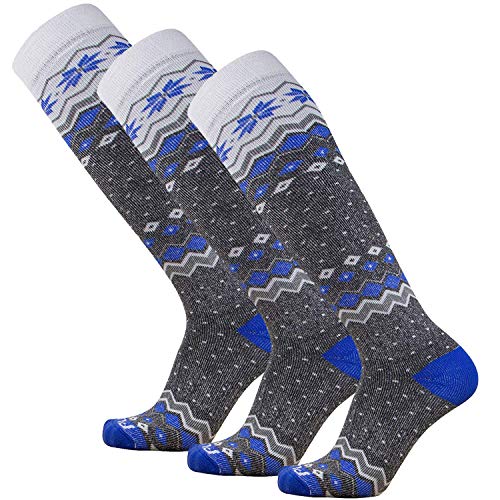
This guide covers resort skiers who want less leg fatigue, backcountry skiers who climb before they descend, and cold-footed skiers who need warmth without a thick sock. Every sock below was picked from its Amazon listing, using the fiber blend, compression rating, height, and cushioning printed there, so you can match the sock to your boot and your skiing instead of guessing from the package.
Quick Picks
As an Amazon Associate we earn from qualifying purchases.
| Product | Best for | Key spec from title |
|---|---|---|
| CEP Ski Merino Compression Tall Socks | Firm medical-grade squeeze on long ski days | 20-30 mmHg graduated compression |
| Smartwool Ski Targeted Cushion OTC Socks | All-round resort skiing with targeted padding | 57 percent merino wool blend |
| Smartwool Ski Zero Cushion OTC Socks | Tight boots that need the thinnest warm layer | Zero cushion over-the-calf fit |
| Sockwell Pulse Knee High Compression Socks | Firm graduated compression in a women’s fit | Firm graduated compression for ski |
| Pure Athlete Wool Ski Socks, 3 Pairs | Stocking up on warm ski socks for the season | Three-pair merino wool pack |
How to Choose
Compression Level
Compression is measured in mmHg, and the number decides how much support your calves get. Firm ski compression usually runs 20-30 mmHg from ankle to calf, with a lighter hold above the calf, which is the range CEP uses for its ski sock. Moderate compression around 15-20 mmHg feels gentler and suits skiers who want light support without a tight squeeze. Light compression, the kind built into most Smartwool ski socks, supports the arch and ankle without a medical rating. Match the level to your legs: tired, achy calves after a full day point toward firm compression, while skiers who only want a snug fit can stay light.
Warmth and Material
Merino wool is the fiber that matters most in a ski sock because it holds warmth when damp and moves sweat away from the skin. Look for blends with at least half merino wool for cold days, with nylon added for strength and a little elastane for stretch. Pure synthetic socks dry faster but feel colder once sweat builds up inside a boot. A wool blend with targeted cushioning warms the shin and foot without turning the whole sock into a thick layer. If your feet sweat heavily, choose a blend with mesh ventilation zones so moisture escapes instead of pooling around your toes.
Fit and Boot Compatibility
A ski sock must reach over the calf so the boot cuff never rubs bare skin, and it must stay smooth with no wrinkles at the ankle. Measure your calf before ordering, because compression socks size by calf circumference as well as shoe size. A sock that is too tight around the calf can cut circulation and feel worse than no compression at all. Check the height against your boot: taller skiers sometimes find a standard over-the-calf sock stops short, while shorter skiers may need to fold the cuff. Try the sock on with your boot liner before a ski day, not on the mountain.
Durability and Care
Ski socks take abuse from buckles, boot liners, and repeated washing, so construction matters as much as fiber. Reinforced heels and toes last longer, and a seamless toe stops the rubbing that causes blisters on long days. Merino blends pill over time, especially where the boot cuff grips the fabric, so expect some surface wear and wash socks inside out on a gentle cycle. Skip fabric softener and high dryer heat, both of which break down elastane and weaken the squeeze. A sock with a lifetime guarantee, like the Darn Tough line, is worth noting, though none of the picks below carry that exact promise.
The 5 Best Options
CEP Ski Merino Compression Tall Socks
The CEP Ski Merino Compression sock is the firmest squeeze in this guide, and it suits skiers whose calves ache by mid-afternoon. Its graduated compression is strongest at the ankle and eases toward the knee, which supports blood flow back up the leg while you stand in lift lines and carve turn after turn. Merino wool in the blend keeps warmth in, while padded zones sit where the boot shell presses hardest. The left and right anatomical fit means each sock matches its foot, so there is no extra fabric to bunch inside the boot.
Specs
- 20-30 mmHg graduated compression from ankle to calf
- 18 mmHg compression over the calf
- Merino wool and synthetic fiber blend
- Padded zones at high-pressure points inside the boot
- Left and right anatomical fit
- Made in Germany
Best for: Skiers who want firm, medical-grade compression on long resort days.
Watch out for: The firm squeeze can feel tight at first, so size by calf circumference and confirm the size chart on the listing before ordering.
Smartwool Ski Targeted Cushion Over-the-Calf Socks
The Smartwool Ski Targeted Cushion sock is the most versatile pick here, and it fits skiers who want support without a medical-level squeeze. Its merino blend balances warmth and breathability, while cushioning sits only where the boot hits: the shin, heel, and toe. The rest of the sock stays thin, which keeps the boot fit precise and stops the foot from feeling packed in. A 4 Degree Elite Fit System holds the sock in place, and body-mapped mesh zones let heat escape on warmer spring days.
Specs
- 57 percent merino wool, 10 percent nylon, 30 percent recycled nylon, 3 percent elastane
- Over-the-calf height
- Targeted cushion at shin, heel, and toe
- 4 Degree Elite Fit System
- Indestructawool technology for durability
- Body-mapped mesh ventilation zones
- Seamless toe closure
Best for: Resort skiers who want one dependable sock for most conditions.
Watch out for: The targeted cushion is thinner than a full-cushion sock, so skiers who run very cold may want a warmer option.
Smartwool Ski Zero Cushion Over-the-Calf Socks
The Smartwool Ski Zero Cushion sock is the pick for tight boots, because it adds warmth with almost no bulk. With no cushioning anywhere, it lets the foot feel the boot directly, which suits performance skiers who want precise control and a close fit. The merino blend still manages moisture and holds warmth, so the sock works on cold mornings even without padding. Its over-the-calf height keeps the cuff clear of the boot top, and the seamless toe stops irritation during long days.
Specs
- 55 percent merino wool, 41 percent nylon, 3 percent elastane, 1 percent polyester
- Over-the-calf height
- Zero cushion construction
- Light elite weight
- Seamless toe closure
- Body-mapped mesh ventilation zones
Best for: Skiers with snug performance boots who need the thinnest warm layer.
Watch out for: With no cushioning, this sock gives less protection against shin bang than the targeted-cushion version, so check your boot fit first.
Sockwell Pulse Knee High Firm Graduated Compression Socks
The Sockwell Pulse is the firm-compression pick for women who want graduated support in a knee-high sock built for ski days. Its firm squeeze supports the arch, ankle, and calf, and the listing describes it as graduated compression for ski, which makes it a direct match for this guide. The knee-high height covers the full calf inside a tall boot, and the women’s sizing runs in the smaller ranges that many ski socks skip. It is a good choice for skiers who stand all day, whether on the slopes or working at the mountain.
Specs
- Firm graduated compression
- Knee-high height
- Graduated compression for ski, per the Amazon listing
- Model SW42W
- Women’s sizing
Best for: Women who want firm graduated compression in a knee-high ski sock.
Watch out for: This is a women’s-specific fit, so check the size chart carefully, and confirm the color and size variant on the listing before ordering.
Pure Athlete Wool Ski Socks, 3 Pairs
The Pure Athlete 3-pair pack is the value pick, and it suits skiers who want warm wool socks for the whole season without buying one pair at a time. Each pair uses a merino wool blend with nylon, polypropylene, and spandex for stretch, and the over-the-calf height keeps the boot cuff off bare skin. An elastic band at the top stops the sock from sliding down, while elastic support at the arch and ankle holds the fit in place. Targeted cushioning sits where the boot presses, which cuts down on irritation during long days.
Specs
- Three-pair pack
- Merino wool, nylon, and polypropylene blend with spandex
- Over-the-calf height
- Elastic band across the top to prevent sliding
- Elastic support along the arch and ankle
- Targeted cushioning at pressure points
Best for: Skiers who want to stock up on warm wool ski socks for the season.
Watch out for: Some Pure Athlete listings have shown gaps in featured availability, so confirm a current seller on the listing before ordering.
Which One Fits Your Situation
For Long Resort Days With Achy Calves
Pick the CEP Ski Merino Compression sock when your calves feel heavy by mid-afternoon. Its 20-30 mmHg squeeze is the firmest in this guide, and the merino blend keeps your feet warm while the compression supports blood flow. The padded zones protect the spots where the boot shell presses hardest, which matters when you ski from first chair to last run.
For One Dependable Sock in Most Conditions
Pick the Smartwool Ski Targeted Cushion sock when you want a single pair that handles cold mornings and warmer afternoons. The merino blend manages moisture, the targeted cushion protects the shin and heel, and the thin panels keep the boot fit precise. It is the easiest choice for skiers who do not want to overthink the sock drawer.
For Tight Performance Boots
Pick the Smartwool Ski Zero Cushion sock when your boots fit snugly and any extra bulk throws off the fit. With no cushioning, it adds warmth without changing how the boot feels, and the seamless toe keeps irritation away. It suits skiers who value control and a close fit over plush padding.
For Stocking Up on a Budget
Pick the Pure Athlete 3-pair pack when you want warm wool socks for the whole season. Three pairs cover rotation between ski days, and the over-the-calf height and elastic top keep each pair in place. Confirm a current seller on the listing, then keep a fresh pair ready for each trip.
Common Mistakes
- Buying by shoe size alone and ignoring calf circumference, which decides whether compression actually fits.
- Choosing a thick, plush sock for a tight boot, which bunches at the ankle and causes pressure points.
- Wearing cotton socks under ski boots, where sweat stays trapped and feet go cold fast.
- Skipping the over-the-calf height, which leaves the boot cuff rubbing bare skin.
- Washing compression socks with fabric softener or high dryer heat, which breaks down the elastane and weakens the squeeze.
Frequently Asked Questions
How tight should ski compression socks feel?
They should feel snug and supportive, not painful. Firm compression around 20-30 mmHg presses hardest at the ankle and eases toward the knee, which supports circulation without cutting it off. If your toes tingle or the sock leaves deep marks, the size is wrong. Measure your calf and match it to the size chart on the listing.
Are compression socks warmer than regular ski socks?
Compression alone does not add warmth; the fiber does. A merino wool compression sock holds warmth when damp and wicks sweat, while a synthetic compression sock can feel colder once moisture builds up. Look for a merino blend with at least half wool for cold days, and pair it with a boot that fits well.
Can I wear compression socks for backcountry skiing?
Yes, and they help on the climb as well as the descent. The squeeze supports the calves during long skinning, while the over-the-calf height keeps the boot cuff from rubbing. Choose a lighter compression level for the uphill, since heavy climbing generates heat, and carry a dry pair for the ride down.
How do I wash compression ski socks?
Turn them inside out and wash on a gentle cycle in cold water, then hang them to dry or tumble dry on low heat. Skip fabric softener and bleach, which damage elastane and merino fibers. Proper care keeps the squeeze firm for many seasons instead of a few trips.
FAQ
How tight should ski compression socks feel?
Are compression socks warmer than regular ski socks?
Can I wear compression socks for backcountry skiing?
How do I wash compression ski socks?
More from Amazon
Programs that pair well with the guide above. Offers and eligibility are set by Amazon and may change.
Free shipping on eligible items, Prime Video and more. Eligible new members can start with a free trial.
Start a Prime free trialAudiobooks and podcasts to listen to on the go. Eligible new members can start with a free trial.
Try Audible freeAd-free music streaming. Eligible new subscribers can start with a free trial.
Try Music Unlimited freeA free business account with business pricing and bulk-buying tools for work, shop or home office.
Create a business accountAs an Amazon Associate we earn from qualifying purchases.


Write Your Review
No reviews yet. Be the first to share your experience!