
Key takeaways
- Five pocket tools that fix loose bindings on the hill, from ratchet drivers to a backcountry multi-tool. Bits, grip, and size compared so you pick right.
A binding screw works loose on the third run of the day, and your back foot wobbles on every turn. Or stop, pull a tool from your pocket, and tighten two screws in under a minute. That is the whole decision behind a snowboard tool kit: buy a pocket tool you will actually carry, or keep relying on the shop at the base. The best tool here is not the one with the most functions. It is the one in your jacket when a screw backs out.
This guide is for resort riders, backcountry riders who cannot walk back to a shop, and parents fixing a child’s bindings on a lift. The five tools below were picked from the names and specs on their Amazon listings, from a full-size ratchet driver to a tool small enough to hang on a key ring. Pick the one that matches your bindings, your pocket, and how far you ride from help.
Quick Picks
As an Amazon Associate we earn from qualifying purchases.
| Product | Best for | Key spec from title |
|---|---|---|
| Dakine Torque Driver | Resort riders who want the most capable driver | 6-piece ratchet driver |
| Burton Bullet Tool | Quick binding fixes with one hand in gloves | 5-in-1 ratchet tool |
| Dakine BC Multi-Tool | Backcountry riders who need the most bits | 10-function multi-tool |
| Dakine Fidget Tool | Riders who want the smallest tool that works | 4-bit pocket driver |
| Gulfmew Ratchet Screwdriver | A simple spare for a second jacket or bag | Multi-bit ratchet screwdriver |
How to Choose
Match the Bits to Your Bindings
Most snowboard bindings tighten with a small set of fasteners, and the wrong bit chews up a screw head in seconds. Phillips number 2 and number 3 cover the bulk of binding screws, while Pozidrive number 3 shows up on some European hardware and a 3/32-inch hex fits splitboard baseplates. A 4mm Allen key and a 10mm wrench handle strap hardware and a few older mounts. Before you buy any tool, look at your own bindings and note which heads they use, because a tool that lacks your one odd bit is useless on the hill. Count the bits on the listing, then match them to the screws in front of you.
Ratchet or Fixed Handle
A ratchet driver spins a screw in with short flicks of the wrist, which matters when your gloves are on and your hands are cold. A fixed handle gives more feel, so you notice the moment a screw seats and you stop before you strip the insert. A fold-out handle sits between the two: it folds flat for the pocket and opens into a lever for stubborn screws. Glove-friendly shapes matter more than they sound, because a slim tool with a slick grip is hard to hold with numb fingers. Pick a ratchet for speed on resort days and a fold-out handle when you want leverage in a small package.
Size and Weight You Will Actually Carry
A tool that stays in the car fixes nothing, so size is a real decision and not a footnote. A full-size ratchet driver rides best in a jacket pocket or a pack, while a keychain-size tool disappears onto a lanyard and is always there. The trade is leverage: tiny tools ask more of your wrist, and a driver with a proper handle asks more of your pocket. Think about where the tool will live on a normal day, then buy the biggest tool that fits that spot. A mid-size driver suits most riders, since it carries like a pocket tool and works like a real one.
Extra Functions Worth Having
A bottle opener costs nothing in weight and earns its keep at the tailgate, but it should never decide the purchase. A retractable tape measure is the one extra that does real work, because it lets you set stance width on the hill instead of guessing by eye. Wrenches in 8mm and 10mm cover the odd bolt that a bit driver cannot reach. Edge and wax work belongs to a bench kit at home, not to a pocket tool, so do not judge these tools on files and scrapers they were never built to hold. Buy for the hardware job first, then treat the extras as a bonus.
The 5 Best Options
Dakine Torque Driver

The Torque Driver has been Dakine’s best-selling multi-tool for over twenty years, and it earns that run by covering every fastener a resort rider is likely to meet. The ratcheting handle turns binding screws quickly with short wrist flicks, and the full-size grip stays easy to hold when your gloves are wet and your hands are cold. It carries the standard bit set plus two wrenches and a tape measure, so one tool handles the whole binding and the stance check that follows. This is the pick for riders who want one tool in the pocket and no second thoughts about it.
Specs
- 6-piece ratchet driver
- Number 2 and number 3 Phillips bits
- Number 3 Pozidrive bit
- 3/32-inch hex bit
- 1/4-inch flat head bit
- 8mm and 10mm wrenches
- Retractable 39-inch tape measure
- Black colorway
Best for: Resort riders who want one capable driver for every binding job.
Watch out for: Confirm the listing is the standard Torque Driver in black, not the Plus version with Torx bits for hydrofoils, which carries a different bit set.
Burton Bullet Tool

The Bullet Tool is Burton’s pocket answer to a loose binding, and it is built around a single idea: five tools in a package small enough to forget until you need it. The ratchet driver speeds up tightening when a screw has backed out mid-run, and the fold-out handle gives you leverage that a flat card tool cannot match. Its bit set covers the Phillips heads and the 4mm Allen key that most bindings use, plus a 10mm wrench for the odd bolt. Glove-friendly shaping means you can use it without bare fingers in the cold, which is when binding screws tend to loosen.
Specs
- Five tools in one
- Ratcheting driver
- Fold-out handle for extra leverage
- Number 2 and number 3 Phillips heads
- Flat head driver
- 4mm Allen key
- 10mm wrench
- Pocket-sized, glove-friendly shape
- Black colorway
Best for: Riders who want the fastest pocket fix for a loose binding.
Watch out for: The fold-out handle needs a firm push to lock open, so practice opening it at home before you rely on it with cold fingers on the hill.
Dakine BC Multi-Tool

The BC Multi-Tool is the one to carry when the nearest shop is a skin track away and the fix has to happen where you stand. It packs the widest bit set in this guide, with three Phillips sizes, three hex sizes, a Pozidrive bit, and two wrenches, so it covers bindings, splitboard hardware, and the odd ski screw on a mixed trip. The trade is size: it is bigger than a keychain tool and belongs in a pack rather than a jacket pocket. For backcountry riders and anyone who rides far from a lift, that trade is worth making.
Specs
- Number 1, number 2, and number 3 Phillips drivers
- Flat head bit
- 2mm, 3mm, and 4mm hex bits
- Number 3 Pozidrive bit
- 8mm and 10mm wrenches
- Bottle opener
Best for: Backcountry riders who need the widest bit set in a single tool.
Watch out for: It is larger than the pocket tools in this guide, so confirm it fits the pack pocket you plan to carry it in before you buy.
Dakine Fidget Tool
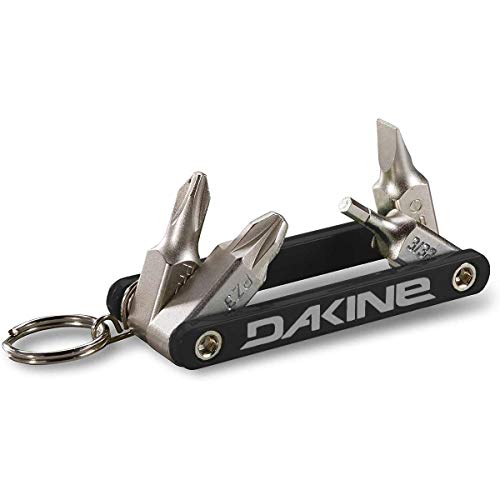
The Fidget Tool is the smallest real tool in this guide, and its whole point is that you will never leave it behind. It holds the four bits a rider reaches for most: a number 2 Phillips, a number 3 Pozidrive, a 3/32-inch hex, and a 1/4-inch flat head. There is no ratchet and no fold-out handle, so it asks more of your wrist than the bigger drivers, and it cannot match their leverage on a stubborn screw. What it gives back is presence: it clips to a key ring or drops into a coin pocket, and it is there on the day a screw backs out.
Specs
- Compact multi-tool for surfboard, snowboard, or skis
- Number 2 Phillips bit
- Number 3 Pozidrive bit
- 3/32-inch hex bit
- 1/4-inch flat head bit
- Black colorway, one size
Best for: Riders who want the smallest tool that still covers the common binding screws.
Watch out for: With no ratchet and no leverage handle, it is slow on a screw that has seized, so keep a full-size driver at home for the stubborn jobs.
Gulfmew Multi Bit Ratchet Screwdriver
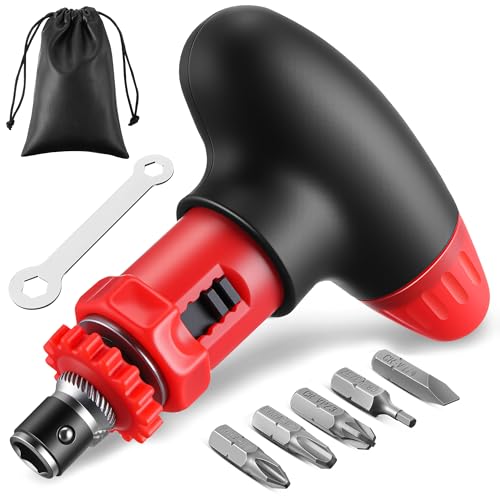
The Gulfmew is the plain workhorse of this guide: a multi-bit ratchet screwdriver built for one job, adjusting bindings, with nothing extra bolted on. The ratchet action turns screws quickly with short wrist movements, and the compact body fits a jacket pocket without the bulk of a full driver set. It is the sensible spare to keep in a second jacket or a travel bag, so a forgotten main tool never ends the day. The listing publishes fewer specs than the brand-name tools here, so treat it as a straightforward driver and check the details before you order.
Specs
- Multi-bit ratchet screwdriver for adjusting bindings
- Compact, pocket-friendly body
- Red colorway
Best for: Riders who want a simple spare driver for a second jacket or bag.
Watch out for: The listing is thin on published specs, so confirm the red colorway and that the included bits match your bindings before you order.
Which One Fits Your Situation
You Ride the Resort Most Weekends
Pick the Dakine Torque Driver. Resort days mean repeated laps, cold hands, and screws that loosen a little more each run, and the ratchet handle plus full-size grip handles that cycle better than any card tool. The tape measure earns its keep when you move your stance after lunch, and the two wrenches cover the bolts the bits cannot. It is the one tool in this guide that never asks you to wish you had brought something bigger.
You Head Into the Backcountry
Pick the Dakine BC Multi-Tool. Far from a lift, a fix has to work the first time, and the BC carries the widest bit set in this guide, including the small Phillips and hex sizes that a pocket driver leaves out. It rides in a pack rather than a pocket, which suits a backcountry day anyway, and the bottle opener is a small reward at the end of a long skin. One tool, every fastener you are likely to meet.
You Want the Smallest Tool That Works
Pick the Dakine Fidget Tool. It covers the four bits a rider reaches for most, and it is small enough to live on a key ring, so it is there on the day a screw backs out. Accept the trade openly: no ratchet means slower work, and no leverage handle means a seized screw stays seized. If your bindings are well kept and you check them at home, the Fidget is all you need to carry.
You Want a Spare in a Second Jacket
Pick the Gulfmew ratchet screwdriver. A second jacket or a travel bag is where main tools get forgotten, and a compact ratchet driver in that pocket ends the problem for good. It does one job, turning binding screws, and it does it without the bulk of a full set. Confirm the bits match your bindings when it arrives, then leave it where it lives and forget about it until the day it saves a run.
Common Mistakes
- Buying a tool whose bits do not match your bindings, then finding out on the hill.
- Tightening a screw until the insert spins, which turns a loose screw into a repair job.
- Leaving the tool in the car or at home, where it fixes nothing.
- Using a pocket driver for edge or wax work it was never built to do.
- Skipping the screw check before the first run, when a loose binding is easiest to catch.
Frequently Asked Questions
Do I need a snowboard-specific tool, or will any screwdriver do?
Any driver with the right bits can turn a binding screw, but a snowboard tool earns its place by holding those bits in one pocket-size package. A loose driver and a pocketful of bits get lost in the snow, while a dedicated tool keeps everything together and works with gloves on. If you ride more than a few days a season, the dedicated tool pays for itself in saved runs.
What size Phillips do snowboard bindings use?
Most binding screws take a number 2 or number 3 Phillips head, and those two sizes cover the bulk of the hardware on the hill. Some European bindings add a number 3 Pozidrive head, which looks like a Phillips but is not, and a Pozidrive bit grips it far better. Check your own bindings before you buy, because one odd screw head can make an otherwise fine tool useless.
Can a pocket tool replace a full tuning kit?
No, and it should not try. A pocket tool fixes hardware: loose screws, a shifted binding, a stance change. Edge sharpening, base repair, and hot waxing need a bench kit with files, an iron, and space to work. Carry the pocket tool on the hill and keep the tuning kit at home, and let each one do the job it was built for.
How often should I check my binding screws?
Check them before the first run of the day and again after lunch, since vibration and temperature swings loosen hardware through the day. A quick twist of each screw with your pocket tool takes under a minute and catches a loose binding before it becomes a fall. Make it part of the same routine as checking your boots and your board, not a rescue job after something feels wrong.
FAQ
Do I need a snowboard-specific tool, or will any screwdriver do?
What size Phillips do snowboard bindings use?
Can a pocket tool replace a full tuning kit?
How often should I check my binding screws?
More from Amazon
Programs that pair well with the guide above. Offers and eligibility are set by Amazon and may change.
Free shipping on eligible items, Prime Video and more. Eligible new members can start with a free trial.
Start a Prime free trialAudiobooks and podcasts to listen to on the go. Eligible new members can start with a free trial.
Try Audible freeAd-free music streaming. Eligible new subscribers can start with a free trial.
Try Music Unlimited freeA free business account with business pricing and bulk-buying tools for work, shop or home office.
Create a business accountAs an Amazon Associate we earn from qualifying purchases.
Write Your Review
No reviews yet. Be the first to share your experience!