
Key takeaways
- Compare the 5 best snowmobile spark plugs for cold mornings and long life — NGK standard, iridium and E-TEC picks with the right gap and heat range.
A snowmobile spark plug is a small, cheap part that decides whether a ride happens at all. On a cold morning miles from the truck, a fouled or worn plug turns a good day into a tow, while the right plug fires the engine and keeps it pulling through deep powder and long lake runs. The choice is not about brand loyalty. It is about matching the thread, the heat range, the gap and the electrode material to the engine in front of you, because a plug that fits one sled can foul or overheat in another.
This guide covers riders on two-stroke Polaris and Arctic Cat machines, owners of Ski-Doo E-TEC sleds, and riders on four-stroke Yamaha sleds, plus anyone who buys plugs in bulk for a multi-cylinder engine. Every plug below was picked from its Amazon listing name and published specs, with the stock number, thread size and gap checked against NGK’s own part data, so you can match the listing to your manual before you order.
Quick Picks
As an Amazon Associate we earn from qualifying purchases.
| Product | Best for | Key spec from title |
|---|---|---|
| NGK BPR9ES (Single) | Everyday two-stroke replacement | Stock 7788, 14 mm thread, 0.8 mm gap |
| NGK BR9EIX Iridium IX | Long-life iridium upgrade | 0.6 mm iridium tip, stock 3981 |
| NGK BR9ECS 4-Pack | Ski-Doo E-TEC sleds | Stock 4677, 4-pack, projected tip |
| NGK CR9EIX Iridium IX | Four-stroke Yamaha sleds | 10 mm thread, stock 3521 |
| NGK BPR9ES 4-Pack | Bulk buy for multi-cylinder sleds | Same 7788 plug, 4-pack |
How to Choose
Match the Plug to Your Engine First
Fitment is the first check, and it has four parts: thread diameter, thread reach, terminal type and tip projection. Most two-stroke engines take a 14 mm thread with 19 mm of reach, while many four-stroke engines take a 10 mm thread, so a plug that threads into one head will not enter the other. Terminal type matters too: some caps need a removable nut, others a solid terminal. A projected tip (the “P” in BPR9ES) sits deeper in the chamber than a non-projected tip, and swapping one for the other changes how the plug burns. Open your manual, find the exact plug number, and buy that number or its documented iridium upgrade — never a plug that merely looks close.
Understand Heat Range 9
Every plug here carries NGK heat range 9, and that number is not a quality score. A higher number means a colder plug: it sheds heat from the firing tip into the head faster, which suits hard-running two-stroke engines. A colder plug resists pre-ignition under load, but it stays cooler at idle and low speed, which is where fouling happens. One step hotter (an 8) can help a sled that fouls plugs on slow trail rides, while one step colder (a 10) suits a modified engine. Either change is a tuning decision, not a casual swap, so treat heat range 9 as the default and change it only when your manual or a fouling pattern says so.
Set the Gap From the Manual, Not From Habit
The electrode gap decides how easily the spark jumps, and it is usually 0.8 mm (0.031 in), though some manuals list 0.7 to 0.8 mm. Too wide a gap asks the ignition to work harder on a cold morning, when voltage is low and the mix is rich; too narrow a gap gives a weak spark that misses under load. Standard nickel plugs can be checked and set with a wire feeler gauge, but iridium plugs come pre-gapped from NGK and should not be re-gapped — the fine 0.6 mm tip is easy to damage with a gapping tool. Check the gap on new standard plugs before fitting, and leave iridium plugs exactly as they arrive.
Copper Core Versus Iridium
Standard plugs use a copper core with a nickel alloy electrode, and they are the cheap proven choice: they fire well, they are easy to read for tuning, and frequent changes cost little. Iridium plugs use a fine 0.6 mm iridium center electrode that needs less voltage to fire, resists erosion far longer, and keeps its gap through many more miles, which is why they suit riders who hate mid-season plug changes and engines where plugs are awkward to reach. The trade is cost per plug and a tip you must not gap by hand. If you change plugs every season, standard plugs are the sensible buy; if you want the longest interval between changes, iridium earns its place.
The 5 Best Options
NGK BPR9ES (Single)

The BPR9ES is the workhorse plug for two-stroke snowmobiles, and the plug to buy when your manual calls for stock number 7788. It is the standard fitment on a wide spread of Polaris two-stroke sleds and many Arctic Cat two-stroke models, which is why most sled owners buy it first. The projected tip keeps the firing end hot enough at low speed to burn off deposits, while the copper core pulls heat away fast enough to protect the tip when the engine is working hard. It is a single plug, so buy two or three for a twin or triple, and keep a spare in the tunnel bag.
Specs
- Stock number: 7788
- Thread: M14 x 1.25
- Thread reach: 19 mm (3/4 in)
- Hex size: 13/16 in (20.6 mm)
- Gap: 0.8 mm (0.031 in)
- Resistor: 5 kOhms
- Center electrode: Nickel alloy, copper core
- Tip: Projected insulator
Best for: Riders on two-stroke Polaris and Arctic Cat sleds who want the exact standard plug their manual calls for.
Watch out for: Some retailer tables list the hex size as 5/8 in, but the NGK catalog hex for this 14 mm plug is 13/16 in (20.6 mm), so confirm the socket size before ordering a wrench. Some manuals list the gap as 0.7 to 0.8 mm, so check your manual rather than assuming 0.8 mm.
NGK BR9EIX Iridium IX

The BR9EIX is the iridium upgrade for engines that take a standard BR9ES, and the pick for riders who want the longest change interval. Its fine 0.6 mm laser-welded iridium center electrode needs less voltage to fire, which means easier firing on cold mornings and steadier running, and the alloy resists erosion far longer than nickel, so the gap stays put. Unlike the BPR9ES it has a non-projected tip, so it is not a direct swap for a projected-tip plug — it is the upgrade for engines whose manual calls for BR9ES, including many Arctic Cat fan-cooled sleds. Buy it when you would rather change plugs rarely than cheaply.
Specs
- Stock number: 3981
- Thread: M14 x 1.25
- Thread reach: 19 mm (3/4 in)
- Hex size: 13/16 in (20.6 mm)
- Gap: 0.8 mm (0.031 in)
- Resistor: 5 kOhms
- Center electrode: 0.6 mm iridium tip
- Tip: Non-projected insulator
- Terminal: Removable nut
Best for: Riders who want an iridium plug that holds its gap through many more miles than a standard nickel plug.
Watch out for: Do not re-gap this plug — the fine iridium tip is easy to damage with a gapping tool. Confirm your manual calls for BR9ES (non-projected) rather than BPR9ES (projected) before ordering, since the two are not interchangeable.
NGK BR9ECS 4-Pack

The BR9ECS is the plug Ski-Doo E-TEC owners need, and this four-pack is the sensible way to buy it for a twin-cylinder direct-injection engine. E-TEC engines run a projected tip with a wider heat range than a standard plug, which helps the plug stay clean during the low-speed running that direct injection creates, and the copper core keeps the tip safe under full load. This listing is a pack of four stock number 4677 plugs, so one pack covers a twin with two spares, and the plugs are not discontinued by the maker. It is the only plug in this guide built specifically around the E-TEC combustion chamber.
Specs
- Stock number: 4677
- Pack: 4 plugs
- Thread: M14 x 1.25
- Thread reach: 19 mm (3/4 in)
- Hex size: 13/16 in (20.6 mm)
- Gap: 0.8 mm (0.032 in)
- Resistor: 5 kOhms
- Center electrode: Nickel alloy, copper core
- Tip: Projected insulator
- Item weight: 8.3 ounces (pack of 4)
Best for: Ski-Doo E-TEC owners who want the correct projected-tip plug in a four-pack with spares included.
Watch out for: This plug is specific to E-TEC and similar direct-injection engines — do not fit it to a standard two-stroke that calls for BPR9ES or BR9ES. The listing gap is given as 0.032 in, which is the same 0.8 mm as the other plugs here, so do not let the different units confuse the setting.
NGK CR9EIX Iridium IX

The CR9EIX is the odd one out here: a 10 mm thread plug for four-stroke snowmobile engines, where the other four picks are all 14 mm. Yamaha four-stroke sleds use this thread, and the iridium version brings the same benefits as the BR9EIX — a fine 0.6 mm iridium tip, lower firing voltage, and a lasting gap. The 10 mm thread and 16 mm hex need a different socket from the 14 mm plugs, and it will not thread into a 14 mm head at all, so the thread check matters most here. Buy it only when your manual calls for CR9E or its iridium twin.
Specs
- Stock number: 3521
- Thread: M10 x 1.0
- Thread reach: 19 mm (3/4 in)
- Hex size: 5/8 in (16 mm)
- Gap: 0.9 mm (0.035 in)
- Resistor: 5 kOhms
- Center electrode: 0.6 mm iridium tip
- Tip: Non-projected insulator
- Terminal: Solid
Best for: Yamaha four-stroke sled owners who need the 10 mm iridium plug their manual specifies.
Watch out for: The 10 mm thread does not fit 14 mm heads, so double-check the thread size in your manual before ordering. The gap is 0.9 mm, wider than the 0.8 mm used by the 14 mm plugs here, so do not set it to 0.8 mm out of habit.
NGK BPR9ES 4-Pack
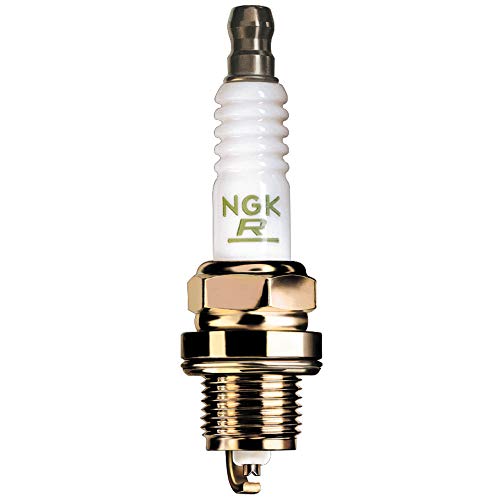
This is the same BPR9ES plug as the first pick, sold as a four-pack under stock number 7788-4PK, for riders who change plugs often or run a triple. The plug itself is identical — same 14 mm thread, same 19 mm reach, same projected tip, same copper core — so everything said about the single plug applies here. The difference is practical: a four-pack covers a twin plus two spares or a triple plus one spare, and the tunnel-bag spare is the exact plug already in the engine. Buy the single when you need one plug; buy this pack when you need a set plus spares.
Specs
- Stock number: 7788-4PK
- Pack: 4 plugs
- Thread: M14 x 1.25
- Thread reach: 19 mm (3/4 in)
- Hex size: 13/16 in (20.6 mm)
- Gap: 0.8 mm (0.031 in)
- Resistor: 5 kOhms
- Center electrode: Nickel alloy, copper core
- Tip: Projected insulator
- Item weight: 240 g (pack of 4)
Best for: Owners of twin or triple two-stroke sleds who want a full set plus spares in one order.
Watch out for: This is the same 7788 plug as the first pick, not a different model, so do not buy both listings for the same sled unless you want spares. Confirm your manual calls for BPR9ES rather than BR9ES, since the projected tip is the difference between the two.
Which One Fits Your Situation
You Ride a Polaris or Arctic Cat Two-Stroke
Pick the NGK BPR9ES single or the four-pack, depending on how many plugs your engine takes. These are the standard plugs for a wide spread of two-stroke Polaris and Arctic Cat sleds, with the projected tip and heat range 9 that those engines were designed around. Buy the single for a one-off change and the four-pack when you want a full set plus spares in the tunnel bag.
You Want the Longest Interval Between Changes
Pick the NGK BR9EIX Iridium IX, but only if your manual calls for BR9ES. The fine iridium tip holds its gap far longer than nickel, needs less voltage to fire on cold mornings, and resists fouling better through a long season. It costs more per plug, yet the longer service interval and steadier firing make it the right call for riders who dislike mid-season plug work.
You Ride a Ski-Doo E-TEC
Pick the NGK BR9ECS four-pack. E-TEC direct-injection engines need this projected-tip plug with its wider heat range, and a standard BPR9ES is not a substitute even though the thread matches. One pack covers a twin with two spares, so you are set for the season and for a trailside swap.
You Ride a Yamaha Four-Stroke
Pick the NGK CR9EIX Iridium IX. Your engine takes a 10 mm thread, not the 14 mm thread of the other plugs in this guide, and this is the iridium version of the CR9E your manual specifies. Check the 0.9 mm gap and the 16 mm hex, since both differ from the two-stroke plugs, and do not try to fit a 14 mm plug into your head.
Common Mistakes
- Fitting the wrong heat range: a plug one step hotter or colder than your manual specifies can foul at low speed or overheat under load, so treat heat range 9 as the default unless you have a known fouling pattern to fix.
- Re-gapping an iridium plug: the fine 0.6 mm tip is easy to bend or crack with a gapping tool, so leave iridium plugs exactly as they arrive from the maker.
- Ignoring thread size: a 14 mm plug will not thread into a 10 mm four-stroke head, and forcing it damages the head, so confirm the thread diameter in your manual before ordering.
- Over-tightening a new plug: too much torque strips the threads in an aluminum head, so follow the torque figure in your manual and use a torque wrench rather than guessing by feel.
- Changing only one plug: on a twin or triple, a fresh plug beside worn plugs masks a weak cylinder, so change the full set together and carry the old good ones as spares.
Frequently Asked Questions
How often should I change snowmobile spark plugs?
Most riders change standard nickel plugs once a season or every 2,000 to 3,000 miles, while iridium plugs often last two or more seasons because the fine tip erodes far slower. The real answer is to read the plug: a tan insulator with a clean electrode means the plug is healthy, while heavy black deposits or a rounded electrode mean it is time to change.
Can I fit an iridium plug where my manual calls for a standard plug?
Yes, when the iridium plug is the documented upgrade for your standard plug number — BR9EIX replaces BR9ES, BPR9EIX replaces BPR9ES, and CR9EIX replaces CR9E. The thread, reach, heat range and tip projection must match exactly; only the electrode material changes. Never fit an iridium plug with a different heat range or tip projection and assume the material makes up for it.
What gap should I use on my snowmobile spark plugs?
Most plugs in this guide use a 0.8 mm (0.031 in) gap, while the four-stroke CR9EIX uses 0.9 mm (0.035 in), and some manuals list a 0.7 to 0.8 mm range for BR9ES. Always set the gap from your manual, check standard plugs with a wire feeler gauge before fitting, and never re-gap an iridium plug, since the fine tip is easy to damage.
Why does my sled foul spark plugs?
Fouling usually means the plug runs too cold for how the sled is ridden — long idling, slow speeds and a rich cold-morning mix all leave deposits a plug never gets hot enough to burn off. A plug one heat range hotter can help, but so can shorter warm-ups, avoiding long idles, and checking the oil mix and jetting, since the plug is often the symptom, not the cause.
FAQ
How often should I change snowmobile spark plugs?
Can I fit an iridium plug where my manual calls for a standard plug?
What gap should I use on my snowmobile spark plugs?
Why does my sled foul spark plugs?
More from Amazon
Programs that pair well with the guide above. Offers and eligibility are set by Amazon and may change.
Free shipping on eligible items, Prime Video and more. Eligible new members can start with a free trial.
Start a Prime free trialAudiobooks and podcasts to listen to on the go. Eligible new members can start with a free trial.
Try Audible freeAd-free music streaming. Eligible new subscribers can start with a free trial.
Try Music Unlimited freeA free business account with business pricing and bulk-buying tools for work, shop or home office.
Create a business accountAs an Amazon Associate we earn from qualifying purchases.
Write Your Review
No reviews yet. Be the first to share your experience!