
Key takeaways
- Compare the best strategy games for cabin trips, from trading and tile-laying to word clues, with player counts, play times and ages to fit your group.
A cabin trip hands you the same problem every evening: a group of mixed ages and mixed patience, one wooden table, and hours to fill after the snow settles or the fire dies down. The game you bring has to survive that reality. It needs to teach in minutes, hold attention for a full evening, and still reward the person who thinks three moves ahead. Pick wrong and the box sits unopened while everyone stares at their phones.
This guide is for families packing for a weekend cabin, friend groups heading to a ski lodge, and anyone stocking a rental shelf for guests. The five games below were chosen from names and specifications on Amazon listings, covering trading, route building, tile laying, gem drafting, and team wordplay, so a group can rotate through different kinds of thinking across a whole trip.
Quick Picks
As an Amazon Associate we earn from qualifying purchases.
| Product | Best for | Key spec from title |
|---|---|---|
| CATAN Board Game | A full evening of trading and negotiation | 3-4 players, 60-90 minute playtime |
| Ticket to Ride (2025 Refresh) | Families learning route strategy together | 2-5 players, 30-60 minute playtime |
| Azul Board Game | Quiet couples and calm thinkers | 2-4 players, 30-45 minute playtime |
| Splendor Board Game | Quick engine-building between activities | 2-4 players, 30 minute playtime |
| Codenames Board Game (2nd Edition) | Large groups and lively party nights | 4+ players, 15 minute playtime |
How to Choose
Match the Player Count to Your Group
Count heads before you pack a box. CATAN covers three to four players in its base game, so a group of five needs its extension or a second game. Ticket to Ride stretches to five, Azul and Splendor stop at four, and Codenames is the only pick here that genuinely handles a whole room, from four players upward. If your cabin party changes size from night to night, bring one game that scales down to two players, such as Azul or Splendor, and one that scales up, such as Codenames, so nobody is left watching from the couch.
Weigh Play Time Against the Evening
A cabin evening has a natural shape: dinner, a game, then drinks by the fire. A 60 to 90 minute game like CATAN fills that slot on its own, while a 30 minute game like Splendor leaves room for a second round or a different box. Short games also survive tired players better, since a mistake in a 15 minute round of Codenames costs little, while a bad opening in a long game can drag for an hour. Pack a mix of one long anchor game and two or three short ones, and let the group choose the pace each night.
Check the Age Range Honestly
Age ratings on the box describe who can follow the rules, not who will enjoy the game. CATAN and Splendor are listed for ages 10 and up, which fits older children who can trade and plan, while Ticket to Ride starts at 8 and works for younger players who grasp matching colors to routes. Codenames leans on vocabulary and wordplay, so it suits teens and adults more than small children. When younger kids are in the mix, pick games where a child can make a real decision every turn rather than waiting through long stretches of adult planning.
Think About the Table and the Pieces
Cabin tables are rarely ideal: they are small, uneven, or already crowded with mugs and snacks. Azul and Splendor keep their pieces compact, with tiles and tokens that stay put on a modest surface. CATAN needs room for its nineteen hex tiles, card hands, and bank, so it wants the biggest table in the cabin. Ticket to Ride spreads a full North America board across the surface, which suits a dining table but not a coffee table. Small, chunky pieces also survive being knocked over by an elbow or a dog, so favor games with sturdy tiles and cards over fiddly miniatures.
The 5 Best Options
CATAN Board Game

CATAN turns a cabin evening into a negotiation session, and that is exactly why it has stayed on shelves for decades. Players settle an island of nineteen hexagonal terrain tiles, trading brick, lumber, grain, wool, and ore to build roads, settlements, and cities, while the robber pawn punishes whoever gets too comfortable. Every game reshuffles the island, so the map never plays the same way twice, and the trading table talk is half the entertainment. It rewards players who read the room as well as the board, making it a natural centerpiece for a group that enjoys talking as much as competing.
Specs
- Players: 3-4
- Playtime: 60-90 minutes
- Ages: 10 and up
- Includes: 19 hexagonal terrain tiles, 95 resource cards, 25 development cards, 20 wooden settlements, 16 wooden cities, 60 wooden roads, 18 number tokens, 2 dice, 1 robber pawn
- Model number: CN3071
Best for: A full evening when the whole group wants one deep game with plenty of trading and table talk.
Watch out for: The base game caps at four players, so check your group size first; the 5-6 player extension is sold separately.
Ticket to Ride (2025 Refresh)

Ticket to Ride is the easiest game on this list to teach, and that makes it the safest first box to open at a cabin. Players collect colored train cards and spend them to claim railway routes between North American cities, chasing secret destination tickets while blocking rivals from the routes they need. Turns are simple enough that an eight-year-old can play meaningfully, yet the route choices stay tense for adults, especially when two players both need the same stretch of track. The refreshed edition keeps the classic map and the 225 plastic trains, so it suits families who want a game everyone finishes together.
Specs
- Players: 2-5
- Playtime: 30-60 minutes
- Ages: 8 and up
- Includes: 1 game board, 225 plastic trains in five colors, 110 train cards, 33 destination tickets, 1 longest-route bonus card, 5 wooden scoring markers, 1 rulebook
- Box dimensions: 11.7 x 3 x 11.7 inches
Best for: Family groups with mixed ages who want a friendly strategy game that teaches in minutes.
Watch out for: The board is large, so confirm you have a dining-size table; it will crowd a small coffee table.
Azul Board Game
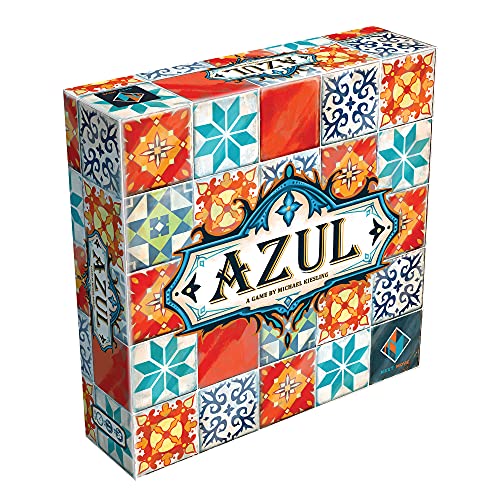
Azul is the quiet game on this list, and cabins need one. Players draft colorful mosaic tiles from factory displays and place them on their personal boards, scoring for complete rows and patterns while trying not to leave tiles that drop to the floor and cost points. The rules take about five minutes to explain, but the drafting decisions sharpen quickly, since every tile you take changes what is left for the next player. The thick resin tiles feel substantial in hand and stay put on a small table, which matters when the game is played on a couch-side tray or a crowded kitchen counter.
Specs
- Players: 2-4
- Playtime: 30-45 minutes
- Ages: 8 and up
- Includes: 100 resin tiles, 4 player boards, 9 factory displays, 1 bag, 1 starting player marker
- Model number: NMG-600010EN
- Manufacturer: Plan B Games
Best for: Two players or a calm evening when the group wants thoughtful play without shouting across the table.
Watch out for: The tile-drafting can feel punishing for new players who take tiles they cannot place, so play one learning round first.
Splendor Board Game

Splendor is the fastest thinking game here, and it earns its place as the between-activities pick. Players take gem tokens, buy development cards, and build an engine that discounts future purchases, racing to fifteen prestige points while watching for noble tiles that reward specific card sets. Each turn offers exactly one simple choice, yet the combinations pile up into real strategy within a few rounds. The whole game fits in a compact box with forty plastic tokens and ninety cards, so it travels well in a packed car and sets up in under two minutes on any flat surface.
Specs
- Players: 2-4
- Playtime: 30 minutes
- Ages: 10 and up
- Includes: 40 plastic tokens, 90 development cards, 10 noble tiles, 1 rulebook
- Model year: 2019
- Manufacturer: Space Cowboys
Best for: Quick rounds between skiing, cooking, or a walk, when the group wants strategy without a long commitment.
Watch out for: The first game can end fast once one player understands the engine, so expect a learning curve across the first two or three rounds.
Codenames Board Game (2nd Edition)

Codenames is the game for the night when eight or more people crowd into the cabin living room. Two spymasters give one-word clues plus a number, and their teammates race to identify their agents from a grid of twenty-five word cards, dodging bystanders and the assassin that ends the game instantly. A round lasts about fifteen minutes, the word combinations change every time, and the shouting and second-guessing are the point. The second edition refreshes the word list and the art, and the box is small enough to toss into a bag alongside the other games.
Specs
- Players: 4+
- Playtime: 15 minutes
- Ages: 10 and up
- Includes: 200 cards with 400 codenames, 40 key cards, 16 agent tiles, 1 double agent tile, 7 innocent bystander tiles, 1 assassin tile, 1 card stand, 1 rulebook
- Model number: CGE00125
- Manufacturer: Czech Games Edition
Best for: Big groups and party nights when the whole cabin wants to play together at once.
Watch out for: It needs at least four players and relies on shared vocabulary, so it works best with teens and adults rather than young children.
Which One Fits Your Situation
A Family With Young Children
Ticket to Ride fits this group best. Its color-matching turns are easy for an eight-year-old to grasp, the 30 to 60 minute length holds attention without dragging, and the two to five player range covers most family sizes. Azul works as a second option for a quieter round, since its tile drafting is visual and needs little reading. Skip Codenames until the children are older, because its wordplay will leave them guessing at random.
A Group of Serious Gamers
CATAN is the anchor for this group, with trading, resource management, and a fresh board every game. Pair it with Splendor as a palate cleanser between long sessions, since Splendor’s engine-building rewards efficiency in a tight thirty minutes. Azul also earns a place here, because its drafting decisions punish careless play and reward players who track what their opponents need. The three together give a full weekend of escalating depth.
A Big Crowd in One Living Room
Codenames is the only pick here built for a crowd, handling four players and up with a fifteen minute round that keeps everyone involved. Split into two teams, let the spymasters rotate each round, and run a short tournament across the evening so every guest gets a turn giving clues. If the crowd thins out later, Ticket to Ride can take over for the smaller group that stays up latest.
Two People and a Quiet Evening
Azul is the strongest two-player game on this list, with direct drafting tension and no downtime between turns. Splendor also plays well at two, since the race to fifteen points becomes a head-to-head efficiency contest. Either one fits on a small table with a drink beside it, and both finish in under forty-five minutes, leaving time for a rematch or a second game before bed.
Common Mistakes
- Packing only long games, then discovering the group is too tired for a ninety-minute session on the first night.
- Ignoring the player count on the box and bringing a four-player game for a party of six.
- Choosing a game with tiny pieces for a wobbly cabin table, where one bump scatters the whole setup.
- Teaching the rules from memory instead of reading the rulebook once, which leads to arguments halfway through the game.
- Buying a game for the youngest child in the group and then wondering why the adults are bored by the third round.
Frequently Asked Questions
How many strategy games should I bring to a cabin?
Bring three: one long anchor game, one medium game, and one quick party game. That covers a full evening, a tired night, and a big group without filling the car. CATAN, Ticket to Ride, and Codenames make a strong trio, since they cover trading, route building, and team wordplay with different player counts and lengths.
What is the best strategy game for a group of six or more?
Codenames is the best choice for six or more players, with no upper player limit and a fifteen-minute round that keeps everyone engaged. The team format means a large group splits naturally into two sides, and the spymaster role rotates so nobody sits out. For a smaller table, Ticket to Ride handles up to five players.
Can children play these strategy games?
Ticket to Ride suits children from age eight, since its turns are simple color matching with a clear goal. Azul also works for children who enjoy patterns, though the drafting penalties need explaining. CATAN and Splendor are rated for ages ten and up, and Codenames leans on vocabulary, so it fits teens and adults better than younger children.
Do these games need a big table?
CATAN and Ticket to Ride need the most space, with a full board, tiles, and card hands spread across a dining table. Azul and Splendor stay compact, with small boards and tokens that fit on a tray or a modest table. Codenames needs only a grid of twenty-five cards, so it works on almost any flat surface, including a coffee table.
FAQ
How many strategy games should I bring to a cabin?
What is the best strategy game for a group of six or more?
Can children play these strategy games?
Do these games need a big table?
More from Amazon
Programs that pair well with the guide above. Offers and eligibility are set by Amazon and may change.
Free shipping on eligible items, Prime Video and more. Eligible new members can start with a free trial.
Start a Prime free trialAudiobooks and podcasts to listen to on the go. Eligible new members can start with a free trial.
Try Audible freeAd-free music streaming. Eligible new subscribers can start with a free trial.
Try Music Unlimited freeA free business account with business pricing and bulk-buying tools for work, shop or home office.
Create a business accountAs an Amazon Associate we earn from qualifying purchases.





Write Your Review
No reviews yet. Be the first to share your experience!