
Key takeaways
- Find the best fire extinguishers for winter home and cabin use, with ABC and B:C picks for kitchens, fireplaces, garages, and plain placement guidance.
Winter changes how a home is used. Fireplaces and wood stoves run for long hours, heaters and candles appear in quiet rooms, garages hold fuel and chargers, and cabin visits often begin with a cold building, a fresh fire in the stove, and cooking in a small kitchen. Those habits make a plain, well placed extinguisher a sensible layer of readiness, sized for the room it serves and easy to lift, carry, and aim.
An extinguisher is only one layer, and never the first one. Working smoke and carbon monoxide alarms come first, because they warn people early and give them time to leave. Use an extinguisher only on a small, contained fire, only with a clear exit behind you, and only while you can leave at once if the fire grows. When in doubt, leave and call emergency services from outside.
As an Amazon Associate, we earn from qualifying purchases.
Quick answer
For most homes, choose a multipurpose ABC extinguisher for living areas near a fireplace or wood stove, a B:C unit for a kitchen or garage, and place each one by an exit path. The five picks below cover those roles. Keep alarms as the first line, use an extinguisher only on a small, contained fire with an exit behind you, and leave and call emergency services when in doubt.
How to choose
Begin with fire classes, because the letters on the label say what the unit is listed to handle. Class A covers ordinary materials such as wood, paper, and cloth. Class B covers flammable liquids such as gasoline, oil, and liquid grease. Class C covers live electrical equipment. A multipurpose ABC dry chemical unit is the common all purpose choice for living rooms, hallways, and cabin main rooms. A B:C unit with sodium bicarbonate is a narrower pick for a kitchen area or a garage, where liquid and electrical hazards lead.
Next, look at the fire class listing figures, such as 1-A:10-B:C or 3-A:40-B:C. Higher figures mean the listing covers a larger fire of that class, and a larger figure often comes with a heavier cylinder and more agent, so balance the figure against handling. Every adult who might use the unit should be able to lift it from its bracket, hold it steady, and work the handle and pin. A five pound agent size is a common middle ground for a main floor.
Placement matters as much as size. Put an extinguisher where a person can reach it without moving toward a fire, preferably near the exit of the room it serves. A living room unit belongs by the doorway, not beside the fireplace. A kitchen unit belongs near the kitchen exit, away from the stove. A garage unit belongs by the door into the house, clear of fuel storage. In a cabin, place one near the main room exit and consider a second small unit near the kitchen.
Cold needs a thought, too. Cabins and garages can sit well below indoor temperatures for weeks, so read the temperature range and storage directions on the label of any unit in an unheated space. Finally, plan for upkeep. Some units can be recharged by a certified professional after use, while others need replacement after any discharge. Check the pressure gauge on the maker schedule, and follow the maker inspection, recharge, and replace directions exactly.
First Alert HOME1 Standard Home Fire Extinguisher
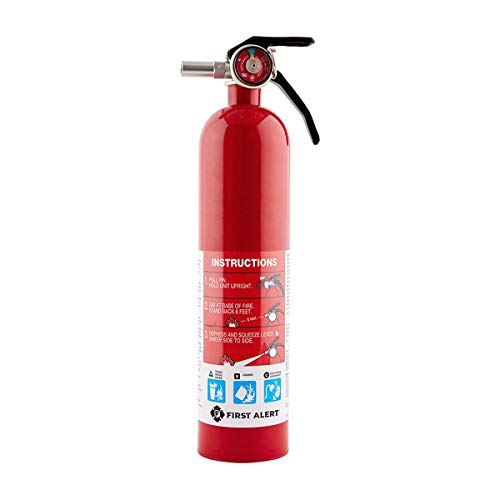
The HOME1 is the smaller all purpose option here, for homes that want multipurpose coverage most adults can handle easily. Its listing covers Class A, B, and C fires, which matches a living room or hallway: wood and paper, small amounts of flammable liquid, and live electrical equipment. For a flat, a small house, or a cabin main room where space is tight, that broad coverage in a standard home size is a practical fit. Place it by the exit of the room it serves, and keep the path clear through winter. After any use, follow the maker directions: this style can be recharged by a certified professional, and the label and gauge directions govern service and replacement.
Specs
- Brand: First Alert
- Model: HOME1
- Fire class listing: 1-A:10-B:C
- Construction: All-metal, commercial-grade metal valve and trigger
- Listed uses: Wood, paper, trash, plastics, gasoline, oil, and electrical equipment fires
- Service: Rechargeable by a certified professional after use
First Alert HOME2PRO Heavy Duty Home Fire Extinguisher
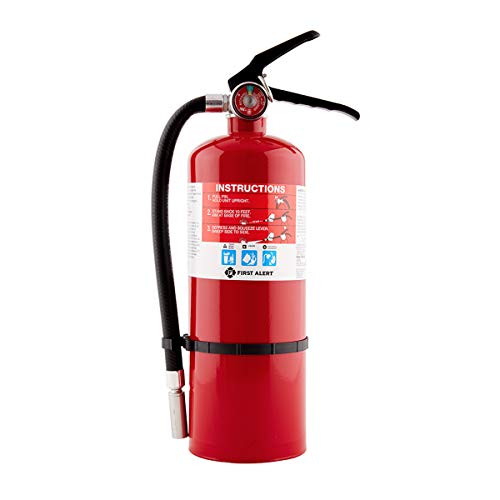
The HOME2PRO steps up the Class A figure over the HOME1 while keeping the same broad ABC coverage, which suits a larger living room, a home with a wood stove in regular use, or a cabin main room with a fireplace. The listing describes all-metal construction with a commercial-grade metal valve and trigger, a color-coded gauge, and a metal pull pin with a safety seal. A bracket and strap are included, and the label is described as chemical-resistant and waterproof. At 9.6 pounds, mount it where every adult can lift it down without strain, such as a hallway outside the stove room. The agent is mono ammonium phosphate, and the unit can be recharged by certified professionals after use.
Specs
- Brand: First Alert
- Style: HOME2PRO
- Fire class listing: 2-A:10-B:C
- Agent: Mono ammonium phosphate
- Construction: All-metal, commercial-grade metal valve and trigger
- Item weight: 9.6 pounds
- Included: Extinguisher and mounting bracket
- Warranty: 12 year limited
First Alert GARAGE10 Garage Fire Extinguisher

The GARAGE10 is a narrower B:C unit built around garage hazards: flammable liquids and live electrical equipment. It carries no Class A figure, so it is not the pick for a living room where wood and fabric are the main concern. In a garage, the listed hazards match fuel containers, paints, chargers, and power tools, and sodium bicarbonate is the agent for this style. The build uses a red steel can with a metal head, a metal pull pin, and a color-coded gauge. At 4.9 pounds, with a bracket and strap included, it places easily by the door between the garage and the house, with an exit at your back. It can be recharged by a certified professional after use.
Specs
- Brand: First Alert
- Style: GARAGE10
- Fire class listing: 10-B:C
- Agent: Sodium bicarbonate
- Construction: Red steel can with a metal head
- Item weight: 4.9 pounds
- Included: Mounting bracket with strap
- Warranty: 10 year limited
Amerex B500 ABC Dry Chemical Fire Extinguisher
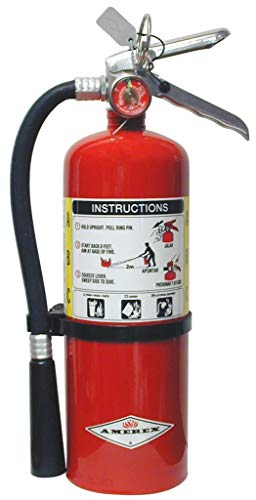
The Amerex B500 is a five pound ABC dry chemical unit from a maker known for serviceable metal valve construction. Its listing figure is 2A:10B:C, with a discharge time of 14 seconds and a range of 12 to 18 feet. Those figures describe a short, controlled discharge: this unit is for a small, contained fire, handled with an exit behind you, and it empties quickly. The all-metal valve and steel cylinder suit a home that wants a unit a certified professional can service and recharge after use. Consider it for a main floor hallway, a utility room doorway, or a larger cabin. Mount it where it stays visible through winter clutter.
Specs
- Brand: Amerex
- Model: B500
- Fire class listing: 2A:10B:C
- Agent: ABC dry chemical, 5 pounds
- Discharge time: 14 seconds
- Range: 12 to 18 feet
- Valve: All-metal construction, aluminum valve
- Cylinder: Steel
First Alert PRO5 Heavy Duty Plus Fire Extinguisher

The PRO5 carries the highest Class A figure in this group, at 3-A:40-B:C, and it suits a larger home, a busy stove room floor plan, or a cabin where one main unit needs the most agent here. The listing describes durable all-metal construction with a commercial grade metal valve and head, five pounds of mono ammonium phosphate agent, a heavy duty mounting bracket and strap, and a color-coded pressure gauge. It is rechargeable by certified professionals after use. That extra capacity brings extra weight, so mount it where a person can lift it down firmly, such as a wall near the main exit of the largest room.
Specs
- Brand: First Alert
- Model: PRO5
- Fire class listing: 3-A:40-B:C
- Agent: Mono ammonium phosphate, 5 pounds
- Construction: All-metal, commercial-grade metal valve and head
- Gauge: Color-coded, corrosion-resistant pressure gauge
- Included: Heavy duty mounting bracket and strap
- Service: Rechargeable by certified professionals after use
Who should skip
Skip this whole category for now if your smoke and carbon monoxide alarms are missing, expired, or unheard in bedrooms, because alarms are the first line and an extinguisher does not warn anyone. Put alarms in place first. Skip a large, heavy unit if the adults in the home cannot lift it down and hold it steady. Skip a B:C only unit, such as the garage pick above, if the room mainly holds wood, paper, and fabric, because it carries no Class A figure. Skip any unit you cannot mount in a visible, reachable spot by an exit. If a fire is large, spreading, or producing heavy smoke, leave and call emergency services instead.
FAQ
Where should a home extinguisher go in winter?
Place it by the exit of the room it serves, where a person can reach it without moving toward a fire. Keep a living room unit by the doorway rather than beside a fireplace, a kitchen unit near the kitchen exit and away from the stove, and a garage unit by a door. Keep the path clear of boots and stored gear.
Which size suits a small cabin?
A standard home ABC unit or a five pound agent ABC unit usually fits a small cabin main room, as long as every adult can lift and aim it. Add a smaller B:C unit near the kitchen only as a second layer. Follow the maker storage directions for an unheated cabin, and check the gauge on each visit.
How often should the pressure gauge be checked?
Follow the schedule the maker prints for the exact model you own. A common routine is a regular visual check that the needle sits in the green area, the pin and seal are in place, and the cylinder shows no damage. If the needle sits outside the green area, or the unit has been used, follow the maker directions for service or replacement.
When should a person skip using an extinguisher and leave?
Leave at once when a fire is growing, spreading beyond a small contained area, filling the room with smoke, or blocking your exit. Leave also when you feel unsure, or when the unit empties without the fire going out. Get everyone outside and call emergency services.
Final verdict
For a balanced winter setup, pair one multipurpose ABC unit on the main floor with a B:C unit where liquid and electrical hazards lead. The HOME1 suits smaller homes, the HOME2PRO adds a higher Class A figure for larger living rooms, and the Amerex B500 brings a serviceable steel build. The GARAGE10 covers the garage with a focused B:C listing, while the PRO5 offers the largest figure here for bigger homes and cabins. Mount your pick by an exit, learn the label instructions before you need them, follow the maker gauge routine, and keep working alarms as the first line. Leaving to call emergency services is always the right call when in doubt.
Product and ASIN Reference
| Product | ASIN |
|---|---|
| First Alert HOME1 Standard Home Fire Extinguisher | B01LTICQYE |
| First Alert HOME2PRO Heavy Duty Home Fire Extinguisher | B07B9BNN24 |
| First Alert GARAGE10 Garage Fire Extinguisher | B000KKLUEU |
| Amerex B500 ABC Dry Chemical Fire Extinguisher | B00F5CKJJU |
| First Alert PRO5 Heavy Duty Plus Fire Extinguisher | B000M2QR8U |
FAQ
Where should a home extinguisher go in winter?
Which size suits a small cabin?
How often should the pressure gauge be checked?
When should a person skip using an extinguisher and leave?
More from Amazon
Programs that pair well with the guide above. Offers and eligibility are set by Amazon and may change.
Free shipping on eligible items, Prime Video and more. Eligible new members can start with a free trial.
Start a Prime free trialAudiobooks and podcasts to listen to on the go. Eligible new members can start with a free trial.
Try Audible freeAd-free music streaming. Eligible new subscribers can start with a free trial.
Try Music Unlimited freeA free business account with business pricing and bulk-buying tools for work, shop or home office.
Create a business accountAs an Amazon Associate we earn from qualifying purchases.



Write Your Review
No reviews yet. Be the first to share your experience!